
Roots of belonging
Wapendwa Debriefers,
I am Nyuki Msimulizi, Storyteller Bee, buzzing back from Tanzania. I work in special education and write under a pseudonym so I can share our stories more freely.
This piece is about my students with disabilities and their families’ experiences of navigating the strengths and violence of our cultures. As well as belonging and spiritual grounding, there is also harm inflicted by culture in the guise of “correcting” differences.
It’s also a very personal piece. I live with mental health challenges and I too have lived through some of these harsh cultural practices. Nobody in my school knows I share this reality with my students.
I write to break the silence, albeit quietly. We as educators – together with schools, families and our communities – can cause harm, or be complicit in it, even under the intention of love, care and faith.
About this edition
Original writing like this is made possible by support from readers. Thanks to Christopher, Federico and Lucy for new contributions.
Nyuki Msimulizi is a special education teacher writing anonymously from Tanzania.
Sonaksha is an illustrator and designer from India.
A child they do not understand
We meet in a small room with two wooden office desks. On one side sits our school admin team and on the other side sit the parents or guardians.
Parents come worried and prepared to defend their child or their parenting. They share their pains in raising a child they do not understand.
I sit in these meetings with a pen and a diary. I start by documenting the meeting. Yet as the parent shares more information, I move from documenting to blankly staring. I scribble empty lines, break pen tops, and perfect the empty nod of sympathy.
The meetings end with both us admins and the parent reflecting on how we will try our best. Internally, we each place the blame on the other.
Outrage
I wish we could stop pretending sympathy. I want to share my outrage.
I am outraged at how we so easily accept and become accomplices of the cultural war against my students' rights to be as they are.
The cultural war is waged from the norms our society has set: on how we move, how we sit, and what we accomplish at what age. Cultural compliance is enforced by shame, guilt, and “healers” for the outcasts who do not fit these norms.
Fighting for a place in society
I fight daily for a place in this society for my students, and I work hard to ensure the world knows my students are fighting it too.
But in my own brain, I have often lost this fight. I too have internalized the cultural expectations and waged this war against myself through my internal chatter.
I teach my students to be bold warriors against any mistreatment, to find their own place in our culture. But I'm not able to do that in my own case. I’ve sat quietly in different rooms as my parents paraded me to “healers” in their quest to heal my temporary lapses in “sanity”.
I wish I could afford myself the same courage that I can hold for my students.
Firm Roots of Belonging
Culture, beliefs and traditions hold a lot of significance and influence in Tanzania.
Rituals, morals and spiritual guidance have given me firm roots of belonging. Cultural rules have given me a guide on how to behave: no shoes indoors; and adults are greeted respectfully, with words like “shikamoo”.
Our morals give me an ethos to live by and our traditions in spirituality give me a tool of support when my anxiety spirals. We strive and hold pride in passing these values to our students.
And we adapt certain practices to find ways that we can all be part of this shared legacy. For example, we teach our non-speaking students to gently tap elders’ heads instead of verbally greeting them.
Toss of a coin
Our strong sense of community means that there is an inbuilt support system for our students. Most of our students do not have support workers. They have close family members to help them when the need arises: grandmothers, neighbours, and mama mdogos (Aunties).
Many of our students are looked after by a single mother, but even then, many of the mothers take full-time employment. They have elders or other family members to support their children after school. We also see instances where mama mdogos become second mothers, when our students have lost a parent.
But these support systems are a toss of a coin. Sometimes they come as acts of love, and sometimes they are reluctantly fulfilled in the name of obligation. Traditions might force a mama mdogo into supporting their nephew or niece. And people meant to be caring for the children can harm the child, verbally or physically.
Mchizi
M. is an alumni and now an intern at the school. She has lost a parent and is being well supported by her mama mdogo. Her school mornings almost always start with piga-ing story (chit-chatting). She drops off at my office, and we share how our days went at home.
While I share the mundane of how my day was, she never shies away from sharing her pain. Her house has many visitors, and daily she is addressed not by her name but by being called “mchizi”.
Mchizi holds a lot of negative connotations. It is a word used to negatively talk/mock persons with intellectual and psychosocial disabilities. Equally, it has been normalized in our culture with a lighter sense of implying someone who doesn’t understand. Its English equivalents range from the r-word to “crazy” or “mad”.
To the person who is labelled “mchizi”, it holds a lot of pain. M describes being called mchizi like a knife going through her stomach.
Am I mchizi, really?
One day M. asked me if “kweli mimi ni mchizi”, am I mchizi, really?
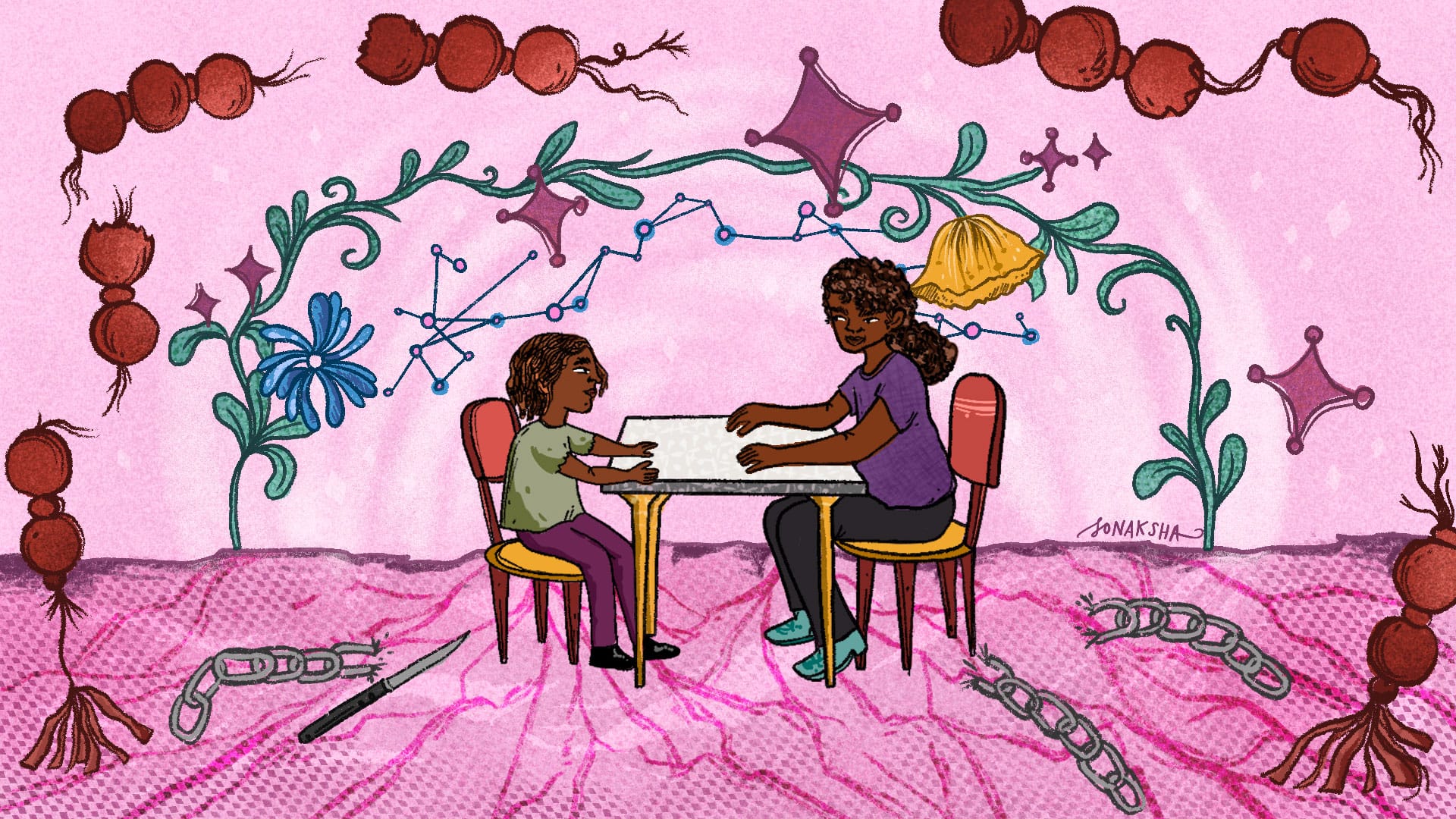
I sat in the room with her, the table keeping our distance at bay. I moved from silence to trying to regulate my beating heart, to trying to breathe again. There was a strange drop in my chest and my stomach felt it just couldn’t function the same.
I had flashbacks of being called the same word. But I tried to hide the fact that I also knew the pain of being stabbed with the same knife.
In the blur of the moment, I couldn’t express outrage or pure sadness. I had already learnt to express the admin’s nod of sympathy.
I presented solutions that I knew would never work, such as sharing this with her mama mdogo, talking to her guests to stop it, ignoring it, and coming back for a heart-to-heart whenever she needed to.
M’s direct stare at my empty solutions will never leave my heart.
Distancing ourselves
As admins or educators we almost always distance ourselves from the action. We let the students deal with these sensitive topics by themselves. We present the same solutions, and watch our students drown in the heaviness of it all.
I have often faced different versions of this moment with M. Our students and our parents ask, demand, and beg for solutions from us ‘experts’. Yet, all we can offer is empty advice and sympathy.
I learnt to create a safe place for M. to share her pain. But I carry the weight of not knowing how to stop the pain.
Am I mchizi, really?
The strangeness is that I have lived through the same pain M is going through. Being called ‘mchizi’ was once synonymous with my identity.
At school I was teased by peers who whispered it out of curiosity. I overheard it on phone calls to my parents from a community who could not witness a “good” girl choosing seclusion, and withdrawing from school. Each instance dug deeper into my soul.
Mchizi became a dirty word that M did not want to associate with. But unlike M, I never questioned myself, kweli mimi ni mchizi.
Instead, I believed it and it shapes how I talk and hurt myself on my worst days. And I absorbed all that my community thought of Mchizi people. Simple-minded, dumb, never understanding, not deserving, a burden, the list went on.
Eliminating differences
When parents or guardians notice their child is not developing like others, they don’t first go to doctors or specialists. The first line of support are mchungajis, faith-based “healers”.
Mchungajis are expected to solve the mystery of why children are lost in their own worlds, not looking at their parents, or not moving “correctly”. They are expected to alleviate or heal the “pain” these differences bring about.
But mchungajis work to eliminate differences rather than understand them. Diversity in thought and behaviour are seen as wrong. And such differences can be attributed to external forces such as kurogwa, black magic or voodoo.
The means they use to eliminate differences in our students can be violent. Our culture supports traditional forms of healing and physical abuse as behaviour management. The parents may support this out of love, care, and desperation.
Dark images
Our students repeatedly draw dark images of their mchungajis’ spaces with large crosses over it. When someone moves too close, some students’ reflex is to flinch or stiffen their bodies ready for pain. And some have burn marks from the “healing” droplets of sacred candle wax used to remove evil spirits.
We sit with their parents, some hiding these stories, others revealing it all. And that’s all we’ve done. We sit there listening, hurting on our students' behalf. We sit there for hours talking about how we can change this. But I sit there feeling we are silently becoming accomplices in this crime.
After witnessing some marks on our students our parent-school meetings usually end with how we need to respect all cultures, even when we do not agree with them. We maintain a record of it in a file, and let it go.
Anger and pain
We are meant to be satisfied by completing our duties of talking to parents. But I sit in these meetings with so much anger. So much pain.
I have been to these healers. I have been pulled by the hair to remove spirits from me. I have sat in rooms with healers with steel chains on their hands. When they were inflicted on me, I could be detached from such pains. But I sit with pure outrage when my students face the same.
I continue to be a part of this cultural system. At a personal level, I abide by my parents, who still give me protective healing beads to stop the evil spirits from making me ‘insane’ again. At an advocacy level, I want to fight each of the cultural practices that want to rid my students of their differences.
“Only God will protect”
As a school, we distance ourselves from the harm we are complicit in, by doing our bare minimum in calling meetings with parents. The parents distance themselves from the harm they inflict by telling themselves it comes from a place of love.
As a community, we distance ourselves from this abuse in the name of abiding to our cultural roots. Mungu tu, atamlinda, Only God will protect.
The pain and abuse still continue. My students and I are lost in these cultural practices. We live in systems that believe there is something inherently not OK with us.
Speaking against these practices is seen like going against the Priest. How are we meant to break these cycles of violence if the practices are too sacred to even question?
Breaking our chains
I often read about fearless advocates, breaking their chains. I document these realities under a disguise. I am fighting this cultural war with a pen, while my students and I continue to bleed.
But there is a hope also, in sharing stories like ours. An unbreakable hope that each time we share our realities we will move towards more humane cultural practices.
Asanteni, thank you my fellow Debriefers for creating a space where all voices are equally valued. One day we will create a reality that is more accepting and loving.
Nyuki
Outro
See Nyuki's previous writing on the Debrief: the One-sided deal of “inclusive” education and how it can mean getting rid of difference.
Let your friends know. Sharing the newsletter is how people find it!
For more from Sonaksha, see their website.
Help us do more. The Debrief is free thanks to reader support.
Acknowledgements
Thank you to Sonaksha for the beautiful illustration, you captured lived realities so well!
Thank you Peter for your patience in giving space to such emotionally heavy pieces. From pitching various ideas, narrowing down my thoughts, to final edits, your process has a special way to bring out nuances.
Thank you to the Disability Debrief, its readers and its sponsors for creating this magical shared space for sharing knowledge, stories, and realities.
Lastly, thank you to my students whose courage has always taught me to be kinder to myself!