
Finding my armour in threads
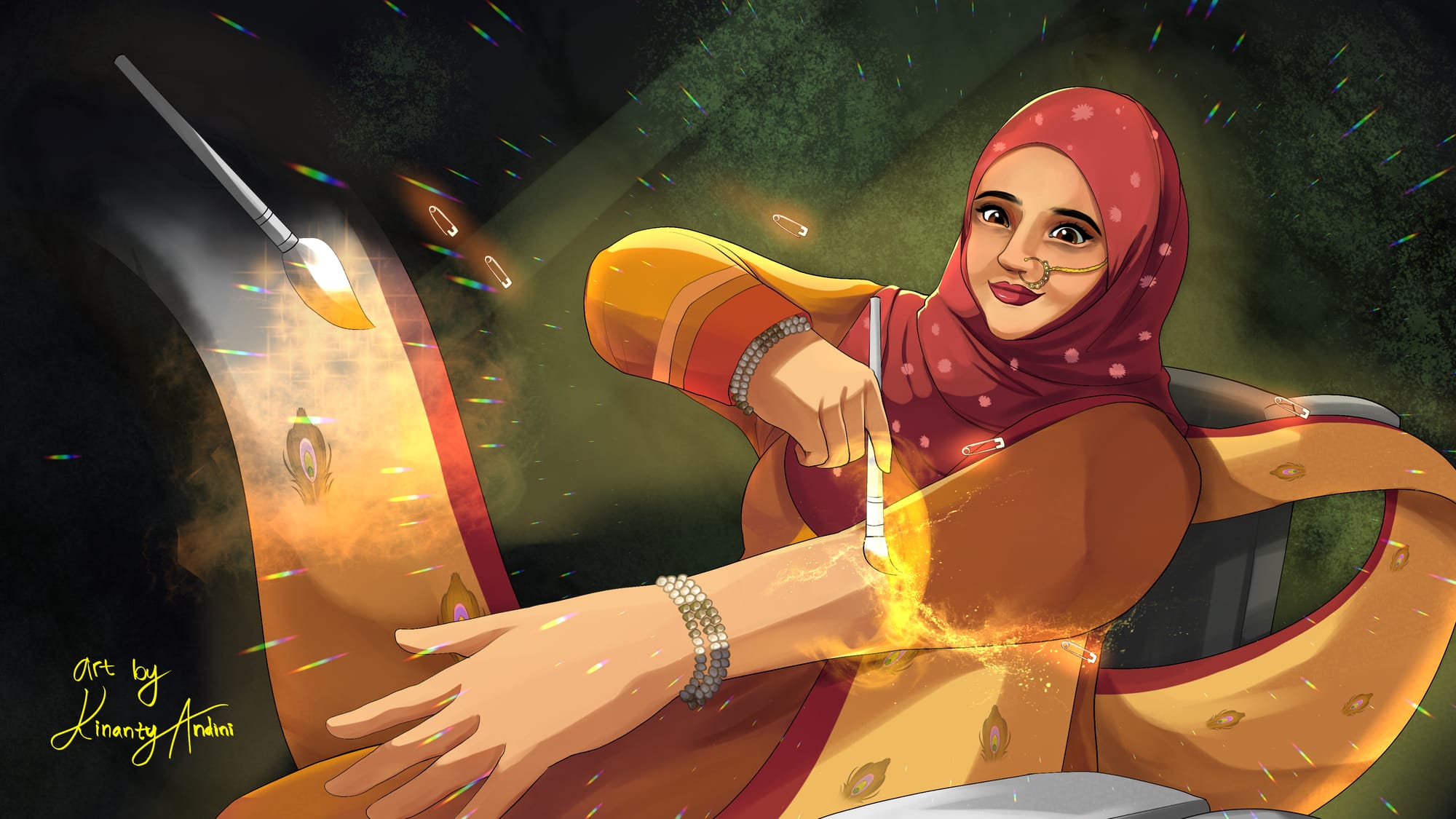
Salam Debriefers,
I grew up with a disability in Lahore, Pakistan. It meant facing the challenges of inaccessibility, stigma and the attitudes of people around me who understood very little about why I used a wheelchair.
But that did not limit my interaction with the city itself, its vibrant culture, food and above all the evolution of Punjabi fashion around me. My disability took me on a journey of its own through fashion and styling.
I found myself being more creative in every step of my journey with clothes, which shaped my mind about my own growth and changing body. And clothes for me played the part of armour, or billboard to make my statement on.
My disability made my body a unique canvas for fashion and styling. Through clothes I found new forms of inclusion and participation. And with a unique form of self-expression, I found my identity.
About this edition
Original writing like this is made possible by support from readers. Thanks to new contributions from Bill, Gordon and M.
Tanzila Khan is an activist and travel writer from Pakistan.
Kinanty Andini is an illustrator and digital artist from Indonesia.
Need for protection
It's a humid day in Pakistan in 1995. I am five years old, and we’re attending a wedding in the village my mother comes from. I am as excited as all the other kids to go to the candyman outside to try some sugary treats.
But my mother won't let me: candy is bad and so is wandering outside in a crowd. I curl up with my head resting on my Baji’s chest, my nanny since I was 2 years old. I am bored as all the other children are running around outside the wedding tent.
I suddenly feel a hand reach out and pick up my pink frock to expose my legs.
I turn around to see some curious women looking at my legs with a mixed expression of pity and wonder. There had already been a buzz going around the village about “a girl being born with crooked legs”. This was their chance to confirm it.
I feel shame. My cheeks go red. I remember my mother’s phrase, “It’s shameful to let anyone see you without clothes”. In an instant I pull down my frock to cover my legs.
In that moment I wished I my frock wasn’t just cute, but also long enough to hide my legs, to hide all of me.
From that moment I became more aware of my disability. And I started to see my clothes not just as a covering, but an armour that would protect me.
Finding myself in frills and fabric
As a toddler I mostly wore ready-made children’s frocks that fit me easily. But as I grew, the clothes had to be modified. For example, a ready-made trouser was useless for me as my legs were not long enough to wear it.
My mother found a woman in our village who would sew clothes. Before fast fashion grew, clothes were mostly stitched by local home tailors like these.
Using fabric leftover from my mother’s clothes or from the grand textile market, this tailor custom-made my clothes. They were made to be easy to put on and take off, and, on my request, “cover my legs to cover the deformity” as much as possible.
The woman would sew a simple frock and with her imagination add a patchwork of traditional artisan work in the front. All the frocks had a unique style of buttons placed on the collar or in front and frills on sleeves.
“Make something like this for me”
I always felt that my cousins wore better clothes than I did. Their clothes had more vibrant colours, better finishing, and cartoons on them. It made them look like the kids on TV.
I made cut-outs from magazines and took them to the woman who made my clothes. While she and my mother had tea and talked. I pointed to them and said, “Please make something like this for me”. My mother laughed and said, “These are machine-made and those cartoons are printed”.
The next time the woman brought a brown dress with a hand knitted yellow flower on the left side of the chest. It was her attempt to make something as close as possible to the cartoon. It became one of my favourites.
A time to sew
When I reached my early teens I started developing more opinions on fashion around me. Television was the main inspiration. Commercials showed confident Pakistan women taking up space in public as teachers, receptionists and air hostesses and their clothing always became a discussion and inspiration.
Soon I didn’t want my mum to pick fabrics with printed fruits, cartoons or flowers. I was a big girl now! I wanted more bright colours: pink, orange, yellow and green. And I wanted patches to add on top of the fabric, accessories and collar designs like I saw on the air hostess.
Talking about clothes meant more ways to socialise and make friends. In a family gathering or at school, the whole conversation could revolve around the comedy or horror of getting clothes custom made. At school we talked about tailors, compared stitching prices and scribbled designs in our notebooks.
Taking to trousers
Pakistan takes its fashion inspiration from Mughal history, the wider subcontinent, and now new Western influences from the media.
The national dress for men and women is the shalwar kameez, a knee length, full sleeved loose fitted shirt, with pants made of the same fabric. And together with it, women wear a dupatta, a long scarf, to cover their head, shoulders and chest.
I could never fully embrace the national dress. I could wear the kameez (top) but not the shalwar (pants) due to my disability.
But then I started using prosthetic legs. And that meant one new thing in my life: trousers!
Prosthetics gave me the possibility of wearing the clothes that I saw on billboards and fashion magazines. They expanded my body and with it my creative expression and fashion canvas.
I was excited for bell bottom trousers, long skirts, or South Asian wear like patiala shalwars, ghagra, garara or choordaar pyjamas. I even wore a saari.
The process was straightforward. Lay down the saari on the bed and then lie on top of it to roll from one side to the other, then ask someone to lift you up for the fall of the fabric to settle on your body, like curtains would drape around a pillar.
But I still couldn’t get anything without customisation. Every detail had to be considered: the process of putting it on, of taking it off, the comfort while seated, getting up and the bathroom visits.
Scarves and safety-pins
As a Muslim girl growing up in a Muslim household, we all learn the importance of covering the body and being modest. In Pakistan most girls after puberty are required to wear the dupatta.
But the fabric of the dupatta is soft and silky. So as I moved my manual wheelchair with my arms, it slipped off.. It also got tangled in the wheels. I was frustrated. But then I found I could use safety pins.
We had a uniform at the all-girls school where I studied. But we managed to customise it so we each looked unique. Other girls would loosely hang their dupattas in whichever way they liked. My customisation was using safety pins so it stayed in one place.
“Colour days” were exciting school functions where we could wear coloured clothes. It was the day to show the dresses we all had been talking about throughout the year, and to show our personalities and creative expression.
Looking back later I see myself in a purple long dress with green sleeves and gold embroidery on the sleeves. On that day I thought it was my best, but today I think that, gosh, I looked like an eggplant.
Secret designs in the parking lot
Later we found a family tailor who could stitch clothes for me, my mother and my cousins. His shop was in a busy market with all kind of mobile phones and electronics stores, crowded with men.
But his shop was in the basement, and I always felt the frustration of not being able to go in and explain how I wanted my dress to look like. Instead he would come to the parking lot to discuss and take my measurements in front of a dozen strangers.
For Eid holidays and family weddings, clothing would get a little competitive, so designs and ideas were kept a secret until the actual day. The tailor was given strict instructions to never share the design of one with another. Yet a dozen strangers in a parking lot knew exactly what I would be wearing.
Fast fashion
In my twenties things were changing, and fast fashion was becoming widely available. The mannequins in markets wore three-piece dresses with different styles.
Most shops were in malls where wheelchair access is possible, although they didn't have accessible changing rooms to try the clothes on. I would be hesitant to take them home to try. But still it allowed me to choose my own dresses, and it was better than the hassle of parking lots.
My own creativity did go in the backseat though. The tailors were now working for big brands producing clothes in bulk. I couldn’t find anyone that was reliable and didn’t charge too much.
Making an activist message
During my college days, I started building a career as an activist of disability rights which involved a lot of public speaking, traveling and media interactions. After one talk at a university, an audience member told me, “I love the flower in your headscarf, this is also my takeaway from this event”.
I laughed, gave her the flower and wondered if people notice everything when you are in the public eye. And I realised I can also use my fashion ideas to make my activism’s message clear: disabled people can participate in every sphere of life.
Armour became Canvas
I started collaborating with a friend who was pursuing fashion as a career. We customised my clothes to add features that could help me as part of my work.
For example, pockets on the dresses. A handbag is hard to carry with both hands on the wheels of my wheelchair. And longer fronts for my dresses are great for power-pose pictures that show the clothes, instead of the disability.
Even if the mainstream fashion space did not help, I was able to pick up the control, and to design and style my own clothes to make a statement. There’s no representation on billboards or on runways for disabled models but that never stopped me from creating my own options.
In between grey and pink
Years later, when I came to Sweden to study, I packed my best clothes. Naturally they were colourful, and I had many frocks as gifts from friends and family to wish me luck for my new journey.
But to my surprise, in Sweden most people wear grey, black or blue on the streets and for all occasions. Back in Pakistan, these dull colours would be associated with sadness. People wearing dull colours would attract attention a sick person would.
Of course in winters I also need to wear a coat or large puffer jacket to protect from cold. But below the jacket I wear an entire world of colours, fabrics, laces and buttons that make me me no matter in which part of the world I am.
More than just an armour
When a Swedish friend borrowed my green frock, I realised that clothes have evolved as an icebreaker, and carrier of my culture and identity.
My new classmates complimented my colour themes and we talked about what fashion meant to us. Clothes aren’t just an armour for me now.
Fashion has become more like a canvas. As well as my culture, it can project power, mood, or my inner child. And using a wheelchair adds an extra stroke of creativity.
Allah Hafiz. Apki Apni,
Tanzila
Outro
See Tanzila's previous writing on the Debrief: Finding my Fairy-tale, on travelling with a wheelchair and a green passport. And for more from Tanzila see her website.
For more from Kinanty, see her website.
Let your friends know. Sharing the newsletter is how people find it!
Help us do more. The Debrief is free thanks to reader support.
Acknowledgements
A big thanks to Disability Debrief for making me relive my journey around clothes and fashion and enjoy each and every reflection while writing this piece. Shout-out to Peter who is always invested in my stories and ideas, asking the right questions before I start writing and then refining the work with his editing. Thanks to the readers and organisations who give their attention and love to Disability Debrief.
Thank you to Kinanty Andini for the beautiful cover photo. I want to also thank Ayesha Hamza, who is my friend and my collaborator, for designing many of my outfits that I have enjoyed wearing daily and at special occasions.