
What being institutionalised taught me about resistance
Dear Debriefers,
There is a presumed history of institutions closing in the United States through the 1980s. But the reality is that institutions never disappeared.
I know because I lived in them. When I was thirteen years old, I had my first experience with psychiatric and residential institutionalisation. In these places, horrific abuse was the norm.
Staff alleged that compliance would help us “get out.” But compliance merely demanded submission to our routine exploitation and acceptance of destructive narratives. We children were seen as the problems needing intervention, rather than the violence that caused our mental distress in the first place.
As authoritarianism grows in the United States, my experiences come back to me. Many are targeted for protesting the violent practices of the administration, and more people are detained or disappeared into institutions.
It can feel like we must yield to those in power. But what the institutions of my childhood taught me is that obedience only gives permission for systems of exploitation to continue. When I had lost all other freedom, non-compliance reignited my will to survive.
About this edition
Rachel Litchman is an artist and writer in Madison, Wisconsin, USA.
Original writing like this is made possible by support from readers. Thanks to Belinda and Nicolette for new contributions.
No longer treated like other children
When I was 13 years old, I was institutionalised for the first time in a psychiatric hospital. It was a jarring and traumatic first introduction to the mental healthcare system.
Rigid wooden beds. Thin green blankets. Locked doors. Strip searches. Solitary confinement. Windows, high up on the ceiling and covered in mesh wire netting. All my belongings — pens, notebooks, electronics — everything except a small soft cover book and pyjama pants gutted of their drawstring cinches, were taken from me.
I believed people went to hospitals for healing. But those first few moments told me that I was not in a hospital but a prison. I would no longer be treated like other children, and I was placed in a ward that included adults.
“You have to give in to get out,” a staff member told me.
Finding ways to resist
The idea of giving in, of losing my agency, only reaffirmed the powerlessness at the root of my distress. So I found ways to resist.
I refused to sign consent forms or participate in therapy. I hid contraband swiped from the front desk—a pen—in the elastic waistband of my underwear. I used the pen to write notes in the margins of my paperback book.
I told them I was doing homework, but my annotations were documentation of my inpatient experiences that might otherwise have been unrecoverable, discreditable under the influence of compulsory sedating medications.
At the time, I assumed my refusal to comply would hurt my chance for self-sovereignty. And in some ways the adults there made sure it did. But years later I understand it was necessary to my survival. I would be sacrificing my humanity if I complied with people who did not recognise it.
“We’re here to help you”
The second time I arrived at an institution was several months later. I was 14 years old. I landed in rural, middle-of-nowhere New Hampshire a thousand miles away from my home in suburban Chicago, Illinois.
This time there were no strip searches or solitary confinement. But what little freedom I gained over my body was consumed by the searing betrayal of displacement.
In the intake office, a brochure lay on the coffee table, composed of smiling children and staff posing in front of a sign bearing the institution’s name.
“We’re here to help you,” the intake official said to me, grinning.
“Helping me would mean you’d let me go home,” I said.
The autonomy to escape
I said that even though home was terrifying.
Home was an awful place where I experienced sexual, physical, and verbal abuse. These were the reasons that almost every child, like me, ended up in the institution in the first place. We were labeled troubled, but in reality we were begging any adult to listen to us, using any distressed, disruptive, embodied language we had.
And yet, home was also a place I had the autonomy to escape — in school, at the library, on long bike rides through the forest preserve. The institution, however, made escape an impossibility, segregation total, and abuse a matter of protocol.
Staying in the institution indefinitely was a greater fear than returning home. I had to behave in a way that would make staff believe I deserved to go back to it. And at the same time, not sacrifice myself to the shaming belief that I—not my circumstances—was the problem in need of fixing.
Reluctant Compliance
At home and in the institution, my fear whittled down the spectrum of safe behaviour to my parents’ or the staff’s desires and interests. I reluctantly complied.
The staff frequently drove us several miles off campus. There, in a forest, we chopped piles of wood for a staff member of the institution’s home. We cleared trails, pulled weeds, and herded pigs to be slaughtered at another employee’s meat and dairy farm.
On the way there, the staff pointed to the other institutions nestled alongside the road.
“That’s for the kids that are really reactive, intellectually disabled,” the staff said, pointing to a white farmhouse similar to our own. “They do farm work.” Then, gesturing to a yellow building, “That’s the residential school for challenged teens.”
Reactive. Challenged. Troubled. Difficult to treat. Delinquent. Disturbed. As if those words justified forced labor or our displacement.
Kids for profit
Years later, I learned that a child would run away from the residential school only to be found dead in our shared forest. And one of the two men that presided over the farm would be arrested for transporting illegal drugs (staff allegedly gave illegal drugs to the disabled children).
In the end over one hundred children would file lawsuits against the facilities, seeking reparation for institutionalised sexual, physical, and psychological abuse.
One of the incentives for our detainment was profit. An incredible serving of violence is doled out by the U.S. dollar. Families or the state often paid teen transport agencies to steal us out of our beds at night. And worse, the man arrested for transporting illegal drugs only went on to open more institutions. There was no justice.
At the time, I did not make the connection that many of the same staff that operated the facility where I resided operated every facility on that strip of road. Nevertheless, I understood they had no incentive to release us. And that worse things could happen to me.
Consequences of disobedience
There was a girl who came to the institution a few weeks after me, sassy, self-righteous, and fighting. I did not like her.
Her behaviour towards me, the other residents, and the staff was loud, confrontational, at times sexually explicit. She seemed to think disobedience would get her out of her institutionalisation. I thought she was being foolish.
And then one night around 3 AM, curled in the thin blankets on my bed, I woke to the sound of crying and screaming.
Someone was being dragged out of bed. Boots clanged against the creaky wooden floorboards. A door opened, then closed, then the footsteps returned. My heart pounded. I slid my feet out of bed and crept into the dark hallway.
At first I saw his muck boots. Then his hands, holding the girl’s pair of shoes. His face. A loathed staff member, staring back at me.
I glared back, saying nothing.
Divide and conquer
I knew, just as abruptly as she had arrived, that the new girl was gone. She had been forcibly transported to another institution. I did not need anyone to tell me that. It had been a common threat to tell us that, if we did not behave, we would be sent to more “suitable” places, like wilderness programs or locked psych wards.
I regretted seeing her as a nuisance, a minor enemy. At the end of the day we were more alike than different. We just wanted to be heard.
But the staff in the institution made us, not their control over our lives, the problems. Therefore, when us children reacted in ways that “disrupted the peace” we were encouraged to think that the disruptor was the issue.
But how could peace exist in a place where our lives, stripped of almost all of our agency and freedom, had been catastrophically disrupted?
Embodying my protest
While fear was a powerful mechanism of keeping us children obedient, anger was a natural response to the widening scope of violence. I could not help but feel it.
I wanted to run away, but there was nowhere to go. I wanted to smash and break things. I wanted to tell someone what I had experienced and seen, but there was no one trustworthy to tell. Consequently, I embodied my protest instead. This felt like the safest option.
I didn’t sleep. I didn’t eat. I didn’t talk. I cycled through each of these behaviours to communicate my grief, and to ask adults to remove me from the harmful situation I was in, when they otherwise refused to listen.
But the staff labeled my silence as an illness, justifying my prolonged institutionalisation primarily through their diagnosis of “social phobia”. They discarded my behaviour as irrational and dismissed the ways that my silence was a deliberate, albeit quiet, form of resistance.
Anybody in power can call protest behaviour an illness. That makes it seem like it doesn’t serve a purpose or is not a protest. And it’s how ableism can be used to take away freedom from people who are demanding accountability for harm.
“Let go of your anger”
My therapist, exasperated by my refusal to speak, later took me to a bridge in the forest. She seemed to understand that rage simmered beneath my silence, but refused to acknowledge the purpose of it.
“You need to let go of your anger.” She gripped the rail and yelled into the treetops to demonstrate for me.
But I did not scream. I glared at her. I would not waste my sacred voice for the sake of a performance.
My anger, enclosed within my silence, was the bridge between fear and rebellion, shame and self-love. I would hold onto it, for as long I was denied safety, consent, choice, a real home.
A choice between two forms of violence
A few weeks before I was supposed to return home, the staff, and then my parents asked, “how would you like to go to a therapeutic boarding school?”
I remembered the girl who got taken in the middle of the night. They meant a school like the one for the kids they called challenged down the road. I understood if I did not select it, they would choose it for me. All along, I’d been deceived.
The woman in the first institution was wrong: giving in would not let me “get out”, because neither home nor the institution meant freedom in the first place.
I had merely been given the option to select between two forms of violence. And in either place I would have to pretend I wasn’t hurting, in order to avoid the other.
Breaking free of chains
At that moment, my silence, my embodied protest, felt pointless. Feigned compliance had only stalled the inevitable. I wanted to make my anger known.
During art therapy, I made a ceramic plate. I painted a bird onto the hard clay. It flew upward, breaking free of chains.
After dinner, staff presented us with our fired ceramic plates. They summoned me to take my meds. I refused them.
I snatched my plate and marched outside in the pouring rain. A staff member followed me. I looked her in the eye, lifted the plate above my head and smashed it against the concrete.
Then I threw the biggest chunk, part of the bird, down a hill into a marshy patch of grass.
People who intended to take advantage of me would intend to do so regardless of my good behavior. How dare they take me away from everything I knew and pretend my anger was anything but righteous and justified. I have never forgiven them for this.
My Greatest Fears Revisited
Over a decade has passed since I was last in any psychiatric or residential facility. But as an adult, I still constantly revisit the fear that once again I could end up in an institution and never find my way back home to my community.
The Trump administration is rapidly expanding criteria for involuntary institutionalisation. This means that more people than before, including migrants, disabled people, political dissidents, and children, are experiencing the frightening, prolonged severance of for-profit detention.
As I recently wrote about in The Progressive, this violence just seems to build on the systems I experienced as a child. The language that the Trump administration uses also echoes the justifications for my own institutionalisation. Mass displacement is justified by calling migrants “the worst of the worst”. Or, in Trump’s words about disabled people after his last election:
“For those who are severely mentally ill and deeply disturbed, we will bring them back to mental institutions, where they belong.”
I watch through my phone screen as my neighbours get snatched off the streets or out of their beds.
Shattered windows. Mylar Blankets. Strip searches. Solitary confinement. Children, ripped away from their parents, and thrown in mesh wire cages. All belongings — phones, identification cards, photos — everything except the clothes on their backs, taken from them.
This is the present violence of expanding authoritarianism.
“Shame! Shame!”
This is not the America I know, I hear some people say. We have civil rights. They closed the institutions in the 1980s.
Some institutions closed, but others like the ones I and many other children were sent to, flourished under the cover of institutionalisation being “over.”
Authoritarianism expands from the normalisation of violence against people who society has already deemed disposable. I understood this from the little outcry toward my own or other children’s institutionalisation and abuse. In the public silence, what happened to me and other children was allowed to expand and continue.
But now I watch protesters put their bodies on the line and chant “Shame! Shame!” at government agents who drag children away from their communities. This kind of disruption—collective, visible, sustained by people outside the institutions with more power—did not exist during my time in the institution.
Resistance is stifled by a confusion over whose behaviour is shameful. When I eventually rebelled it was because I understood, as long as I lacked freedom, I could not protect myself from further violence.
I could only preserve my will to live by asserting that shame wasn't something I should feel, despite all the way those in power tried to instil it in me. It was their legacy, not mine.
Finding my own perch
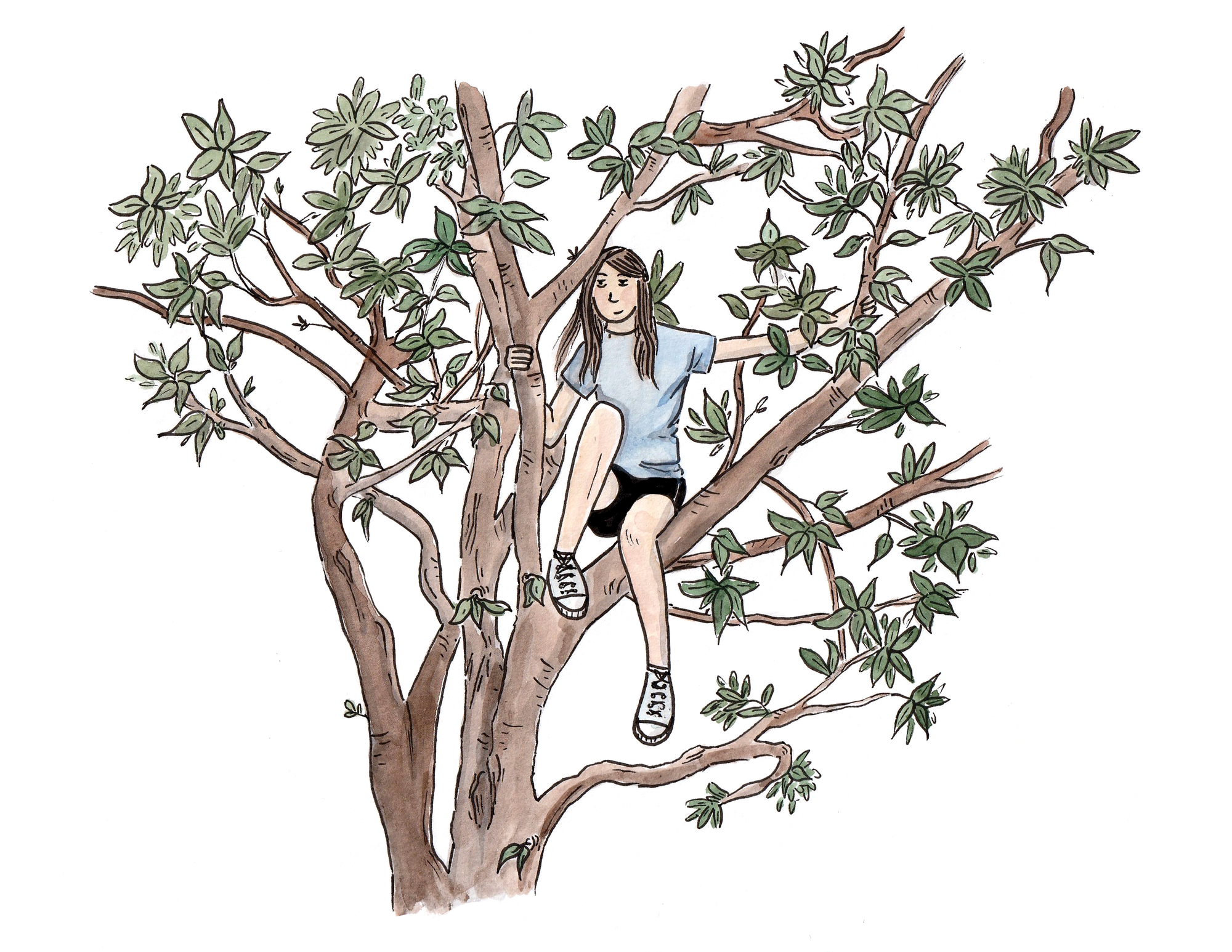
“Rachel, you need to come down from that tree,” a staff member scolded me on one of my last days in the residential institution.
Once again I was trying to escape forced medications. This time I’d climbed to the top of a tree. I didn’t care about the consequences anymore. What more was there to lose? I wasn’t going home after all. I was going to a residential school.
Compliance would not save me. It would only make me lie to myself about my willingness to endure the nightmare I was living.
I was speaking again. The staff didn’t like what I had to say, and characterised my increasing boldness as a form of regression. They asked me when I was eventually going to give in.
“How about you come up and get me yourself?” I taunted.
“I’m not doing that, Rachel.”
“Why not? You can’t climb a tree?”
In the branches, the warm summer breeze felt good on my face. I stared down at the staff member and smirked. I felt victorious.
From the trees,
Rachel
Outro
See Rachel's previous essays on the Debrief: Get set for independence on how she left rehab hospital more disabled than she arrived, and Forgotten, on finding worth in a frightening shadow world.
Find Rachel online: on her website, support her work on Patreon or follow on instagram.
Let your friends know. Sharing the newsletter is how people find it!
Help us do more. The Debrief is free thanks to reader support.
Acknowledgements
Thank you to Peter Torres Fremlin and Celestine Fraser for editing this piece and enduring my tendency to write dark, sad things, and helping me orient my final message toward a light.
Thank you to all my professors in the UW-Madison Department of Gender & Women’s Studies and the Department of Medical History for guiding me to language to articulate systems of power. It was a privilege to learn from you.
Thank you to writers Dorothy Roberts, Duaa Eldeib, and Rachel Aviv, whose writing on the child “welfare” system and disabled children brought clarity to the confusion of my childhood. And Alys, for being sad and mad with me on Davis Street.
Finally, thanks to all the readers of the Debrief whose support made writing this piece possible.
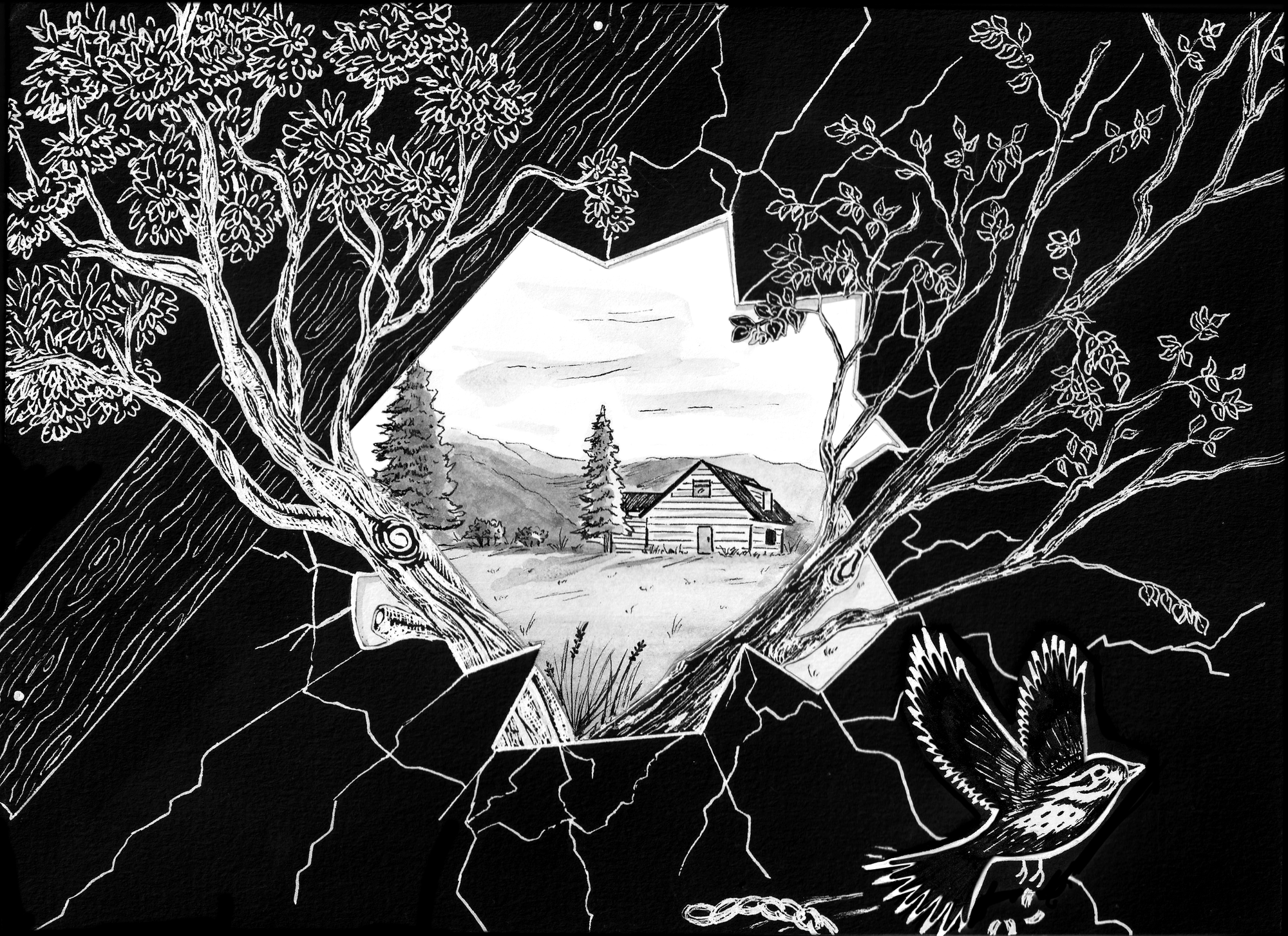
The two illustrations in the essay are by me.