
My Octopus takes me to the Neem Tree
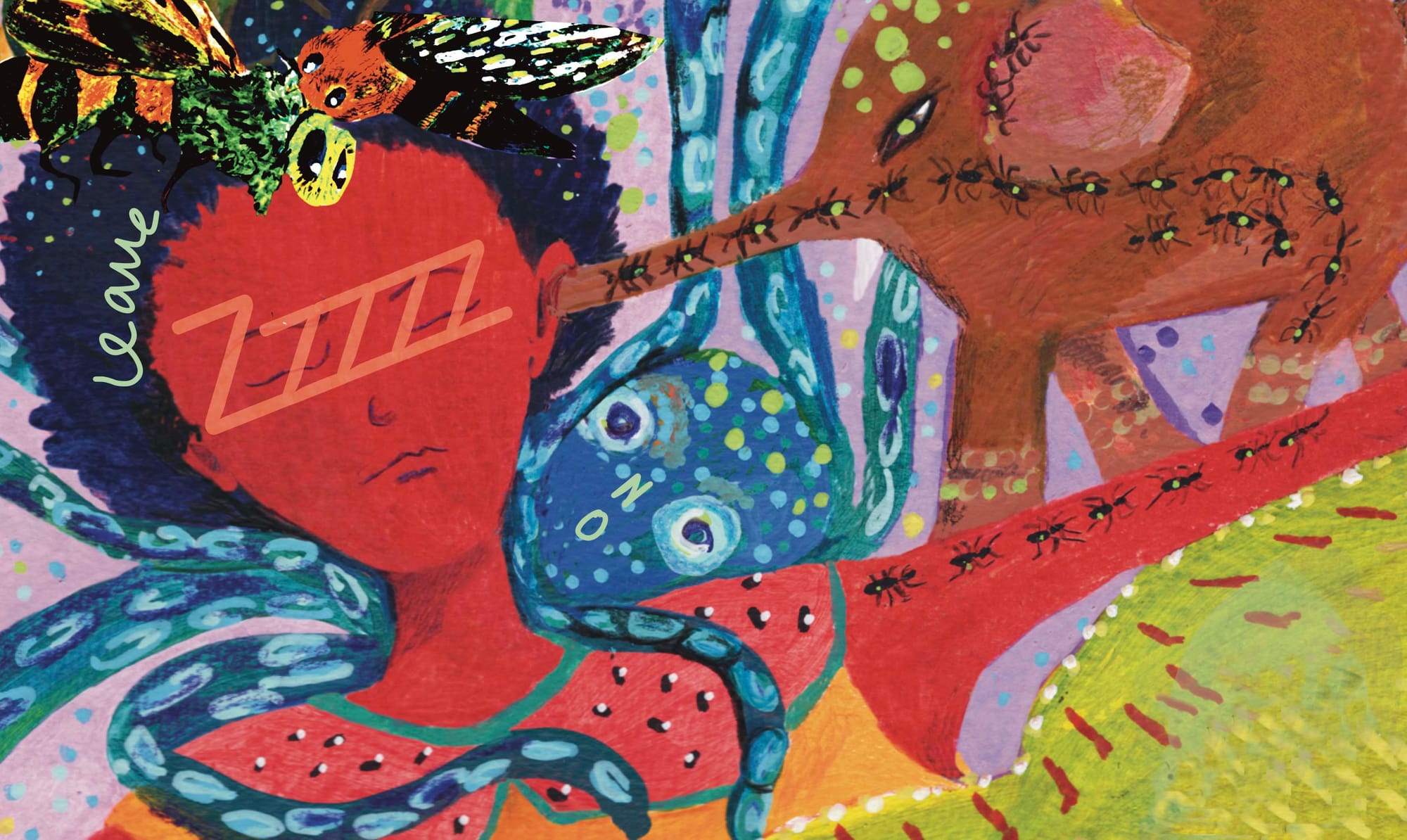
Priya Debriefers,
Everyone else could fall asleep around me, picked up by the sleep-demon. But I stayed behind, awake, a child of five or six years old. And for the first time, I became conscious of the tizzy of uninterrupted internal thoughts, growing to the size of a continent.
As an adult I thought that words like “anxiety”, “ruminations”, “voices” might be useful to describe how I felt during those nights. But each learned word was serious, verbose, limiting, and made me wary. If I approached my experience through academic discourse, I might hide my experiences to fit.
Instead, I started sketching to find my way, reimagining scenes and animated thoughts. I found myself and all the beings – animals, plants and humans – I loved. I disentangled myself from mental health jargon I’d learned as an adult.
Here is the illustrated story of my childhood nights. I discovered that when adults disappeared into sleep, a world of non-human sentience took their place. Most of them gathered within the world of the Neem tree growing outside our house.
About this edition
Fulltime Hedgehog is the artist name of Shailza, an artist-illustrator and researcher from India. She illustrated this edition with acrylic colours and pens, and then some digital retouching.
In Indian languages “hedgehog” is used to describe a person who has soft defences and questionable social graces.
The Debrief can publish original writing and art thanks to support from readers. Thanks to Elizabeth, mj and Thomas for new contributions.
Holding onto my day so strongly that I barely sleep
Days and nights are extremely noisy in my neighbourhood of Hindi, Bhojpuri, Awadhi, Odia, Santhali and Bengali-speaking people in Calcutta.
Two factories, one mechanical and one chemical, synchronise their mini concerto of sirens. Loud speakers bleed songs in different languages until 1 am on any and all public and religious holidays.
When everything drops into a quiet state, the call of the maal gaari (goods train) likely wakes someone up from their deep sleep.
Adults are used to these sounds, but children are new humans. We find a wonder-bird in every stimulus and catch and hold it. My problem is that I hold onto my day’s stimuli so long that they become part of me and keep me awake.
I admit out loud that I can’t sleep. But I hear back “Baccho ko kya chinta, bus bistar pe giro aur so jao”, What does a child have to worry about, just go to sleep.
But what to do if my thoughts are thumping?
Sleeping together
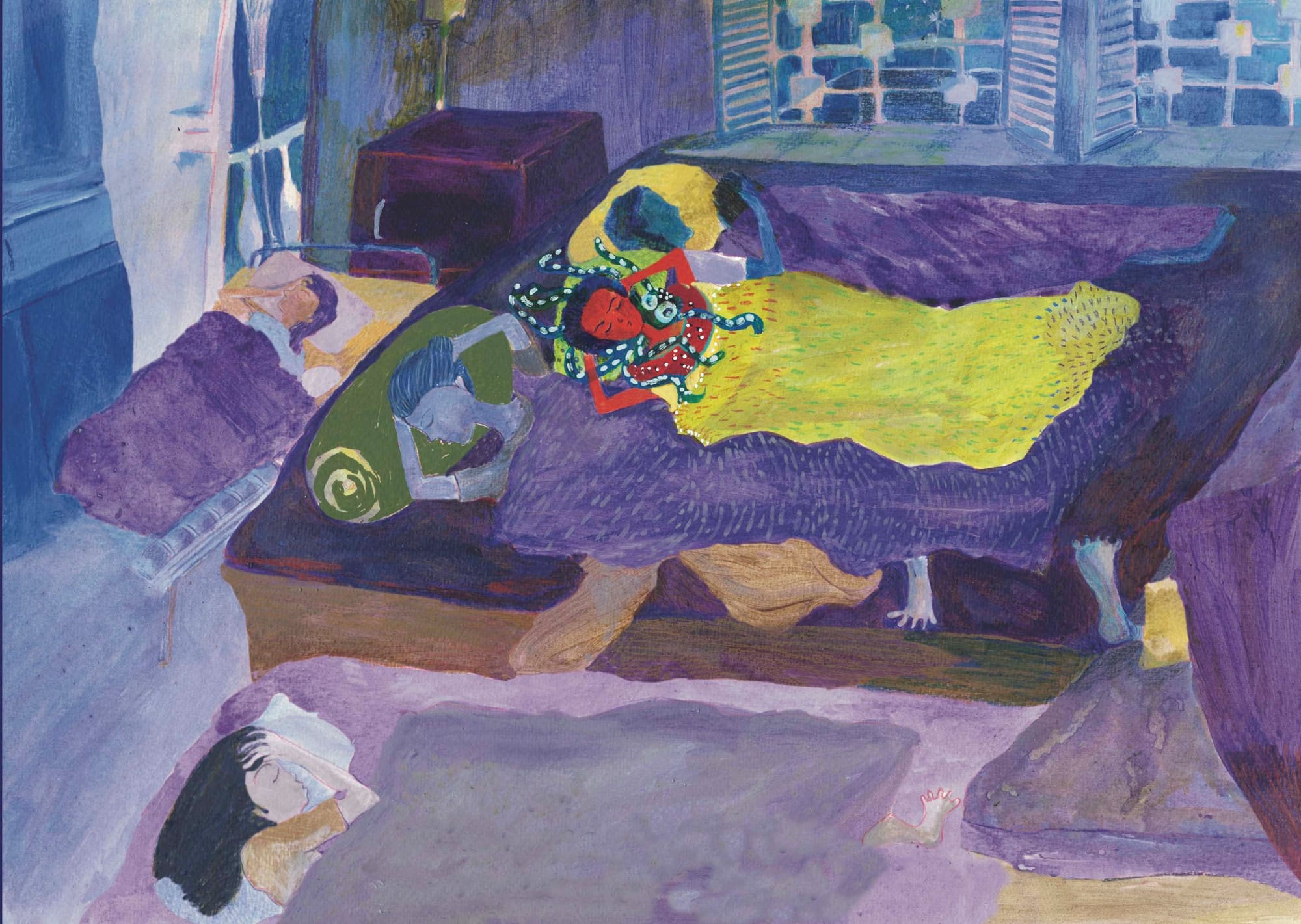
I sleep in barka ghar, the big room. I sleep with Ma (my grandmother), my unmarried aunts and uncle, and sometimes my grandfather when he is going through his asthma phase. He requires comforting words and heavy duty care.
While there are personal rooms in the house, barka ghar is a shared space where I feel my best. It has two large windows facing an open field and is airy in the hottest summer months.
I am a precious grandchild so I get to sleep next to Ma. My aunts and uncle, who often gather in the room to discuss important things late into the night, take the remaining spaces: bed, sofa, mattress on the floor, khat (a folding rollaway bed).
My grandpa, despite his many privileges, only manages to get the sofa or the khat. We often ask him to go to his own room but I suppose he misses our company.
This cosy arrangement can be a protection from the ten types of ghosts that I read about in the illustrated storybook an uncle gave me. But it becomes a nuisance when I Can. Not. Sleep.
An anxious rectangle
I am in an anxious rectangular space, awake next to people attached to their sleep. I cannot move much, nor can I lie still.
I try copying the adult postures around me: putting my hands behind my head, turning over on my belly, curling up like a worm.
But the rectangular shape is my tragic limit. The hardest time of the night is 3am when I should be asleep but I am not.
Light sleepers, night-feeders
Sleeplessness puts me in an unnecessary, embarrassing, inconvenient spotlight. It marks me out as odd. Kindly put, as an “overthinker”, or “too sensitive”. Unkindly put, as asamajik or asadharan, asocial or unusual.
Ma is a light sleeper, midnight cook and late night eater. She reports me to mummy if I sleepwalk (“that can be dangerous”) or stay past 4 am (“how will she stay awake in her school?”). For her it is normal to be awake until 1 am but not past 3 am: “everyone needs at least four hours of sleep.”
But outside of those conditions, Ma defends my sleeplessness. She feeds me a midnight meal of rotis mashed into cold milk with jaggery. And she consolidates my trust in the night, why fear it? “The neighbourhood is safe, the people in the factory are awake, as are those in the Thakur Bari, if you walk out of the door someone will drop you back.”
And when I quail about ghosts? “Koi bhoot-voot nahi hai”, there’re no ghostie-toastie, “bhooto se bure toh log hai”, and they’re better than humans anyway. I have kept a mild liking for ghosts since then.
Restless thought-beings
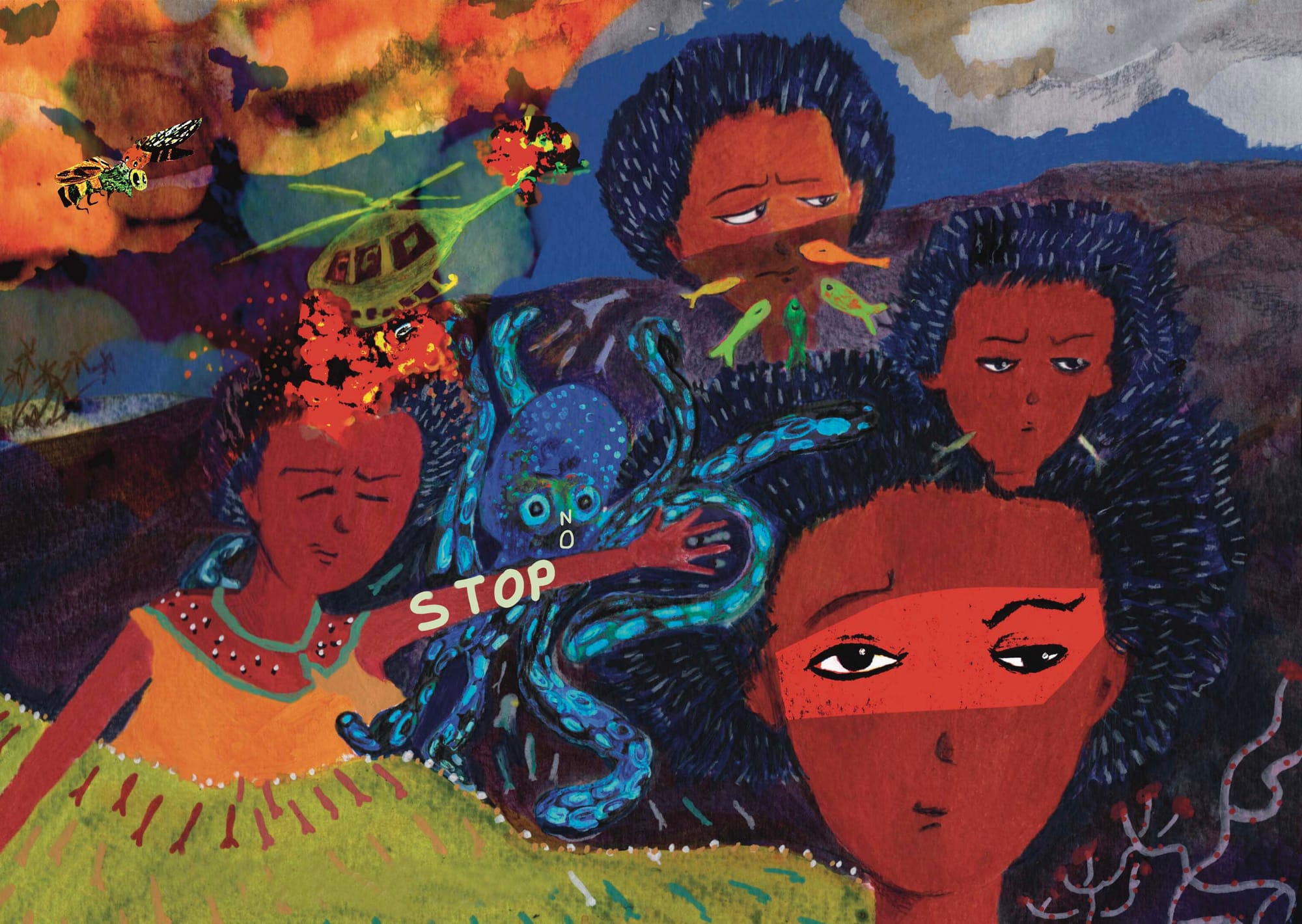
In my wakefulness I listen to worried thought-demons.
There is an over-explainer bee waiting for a way out of giving explanations. An elephant-fear who is wearing ghungroo (anklets), and wants to get on the night stage and dance dhaye-dhaye.
But, pulled out of watery emotions, I feel most sorry for the octopus. It wraps its tentacles around my neck for their dear life.
These restless thought-beings wind me up with their agitations. And they also seek a way out of their trapped existence.
Sleep nibblers
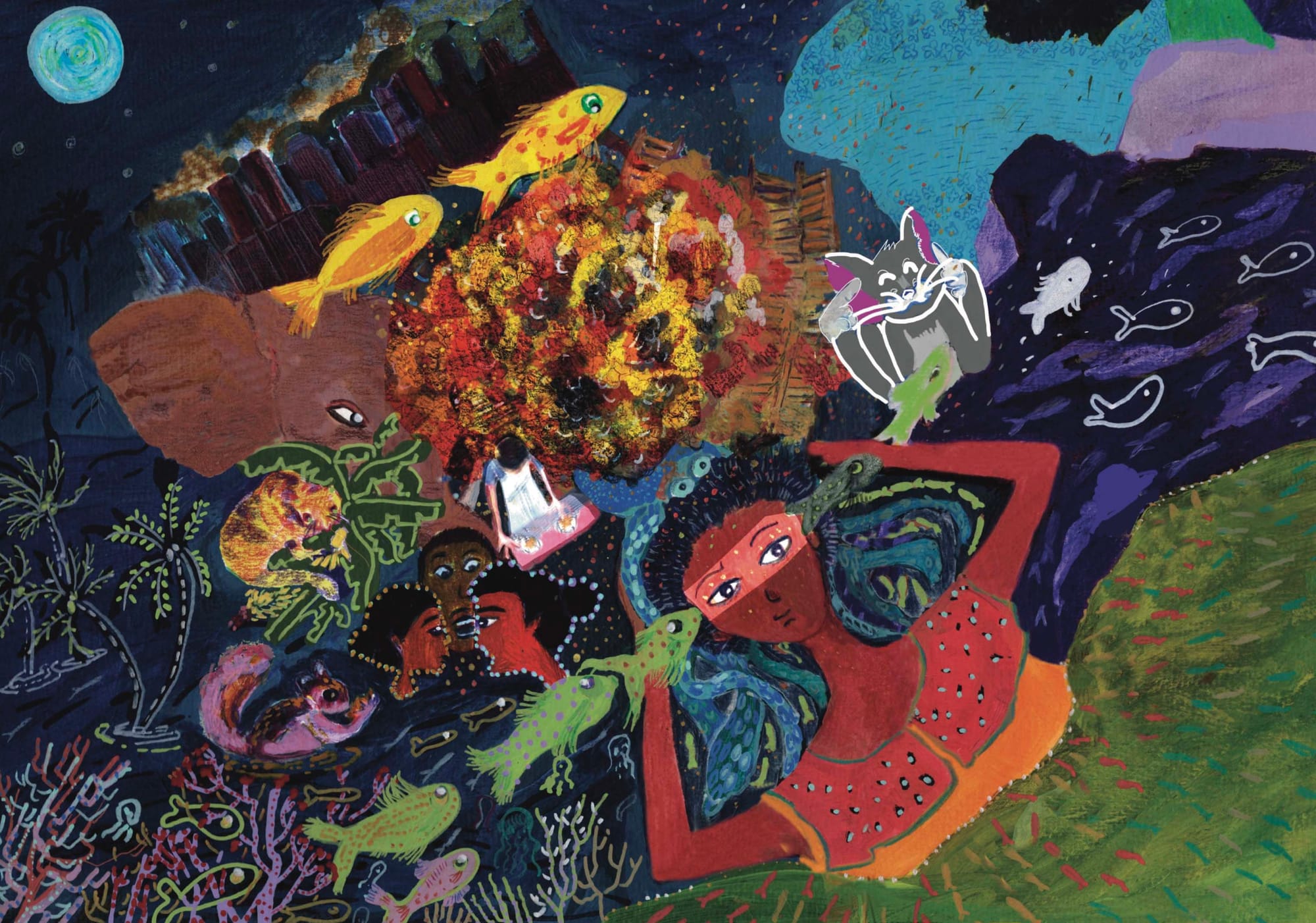
When I concentrate too hard on these animal sensations, the days or even months before glimmer in my mind like jugnu, fireflies. I see the Tom and Jerry chase sequences I watch and rewatch during the day, or the horror stories I request any adult willing to indulge me to tell.
I run over stories in my mind, of family members, neighbourhood ancestors and caregivers. They are part of every family member and visitor’s conversation, casually dropped between hellos, teas and chores. I eavesdrop on the miseries and bickerings of adults in the house and the neighbourhood.
I feel highly anxious thinking about the unending pile of rotis that women need to get through, or changing colour of fumes from factories with changing owners. And the old boilers are so close to my house that I feel I need to inspect them, especially at night.
The theatre of the night
I see animals, real and imagined.
The siyal (jackal) ghost that Ma describes in her dreams from the time when she came to the house as a new bride. Snakes that Ma fears and I want to catch slithering past at least once in my life. A bhaam (civet cat) that likes making its way from palm trees to the Neem tree to open kitchens.
The roosting birds that are likely to claim every nook on the roof. This month’s cat warden who is clearing off the mice infestation. The squirrels who we jokingly call our ancestors, since they keep a close watch and bother us if we miss some crucial ritual.
My brain makes what my mummy calls a jatra, theatre. This jatra is made of all the tiny visual and verbal syllables that inhabit the house and the neighbourhood and the conversations of adults who live with me and those who visit. They often burst into my night with a loud bang.
Night strolls
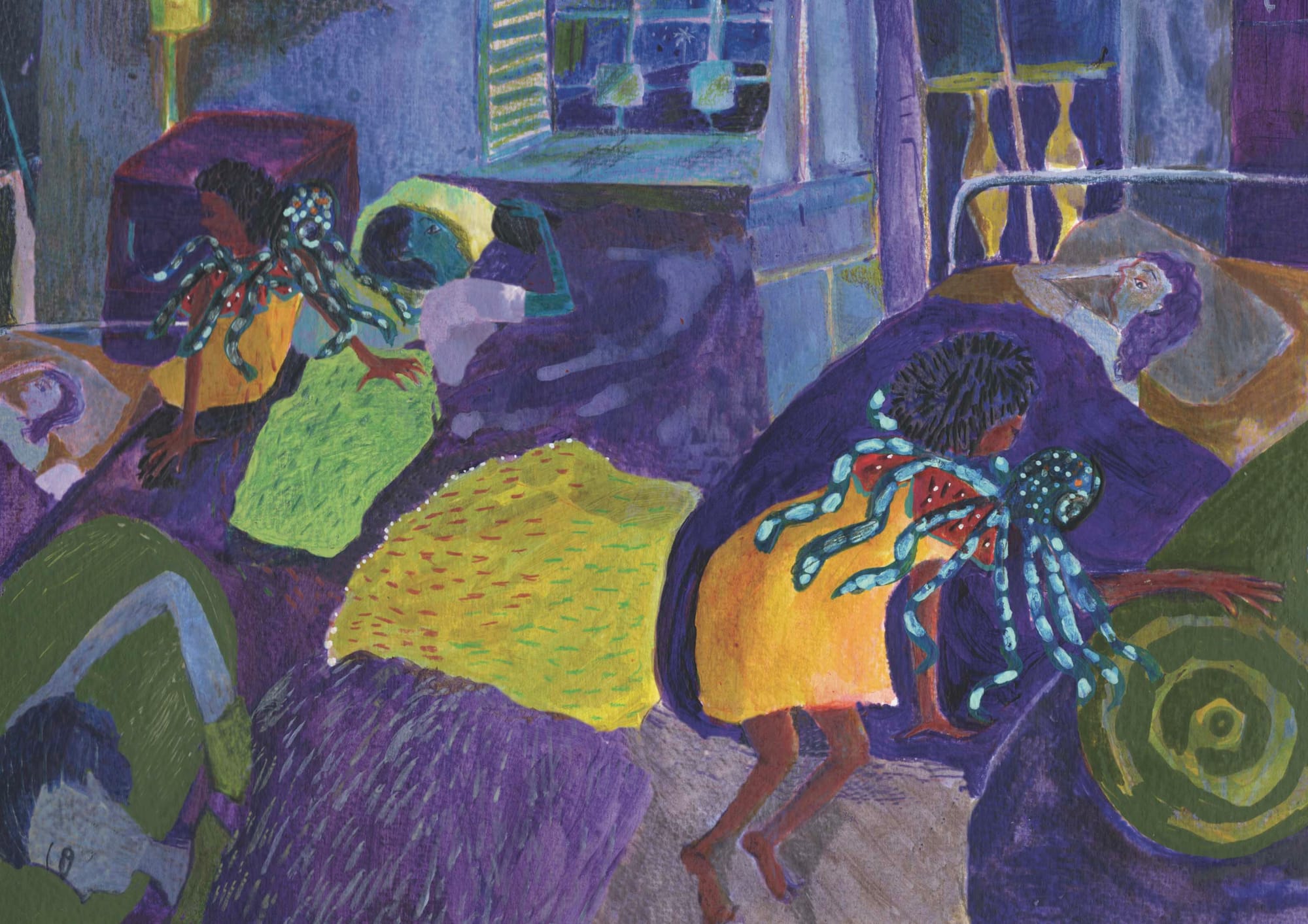
This jatra in my head triggers night strolls. I carefully pick up my head and its creatures. I try very hard not to step on any nerves or open hair or legs or arms, to make my escape without waking up an adult.
My destination is the Neem tree. It is right outside our veranda, growing old in the adjacent Thakur Bari. The Thakur Bari is a collective living space where a priest and his family lives with almost everyone from his village: the barber and his family, the paan shop owner and his helper, the occasional taxi driver, the day’s card winner.
To my Neem
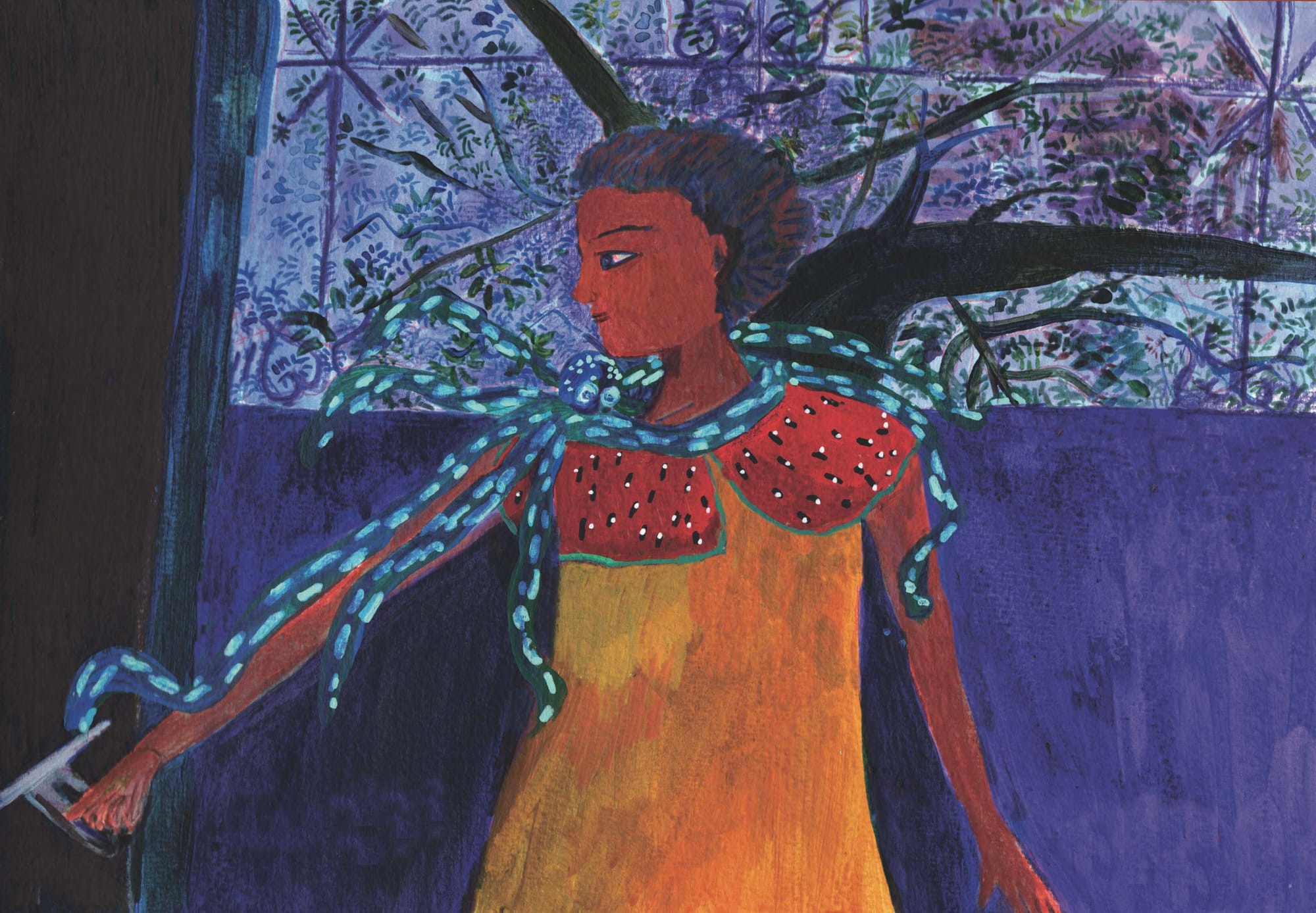
Neem tree leans into our house. She ignores the brick wall partition my father carefully built around the house to signal our difference from the neighbours, and lets herself in through the grilles.
I am not alone at the Neem tree. Squirrels, sparrows, an occasional owl, a kite, quite a few mice, early morning sunbirds, two male cats, one distant kingfisher, and a civet are welcomed into a network of paths across rooftops. As everyone falls asleep, they become visible to silent observers.
I watch, and I let loose the octopus from around my neck.
Finding a way back to ourselves
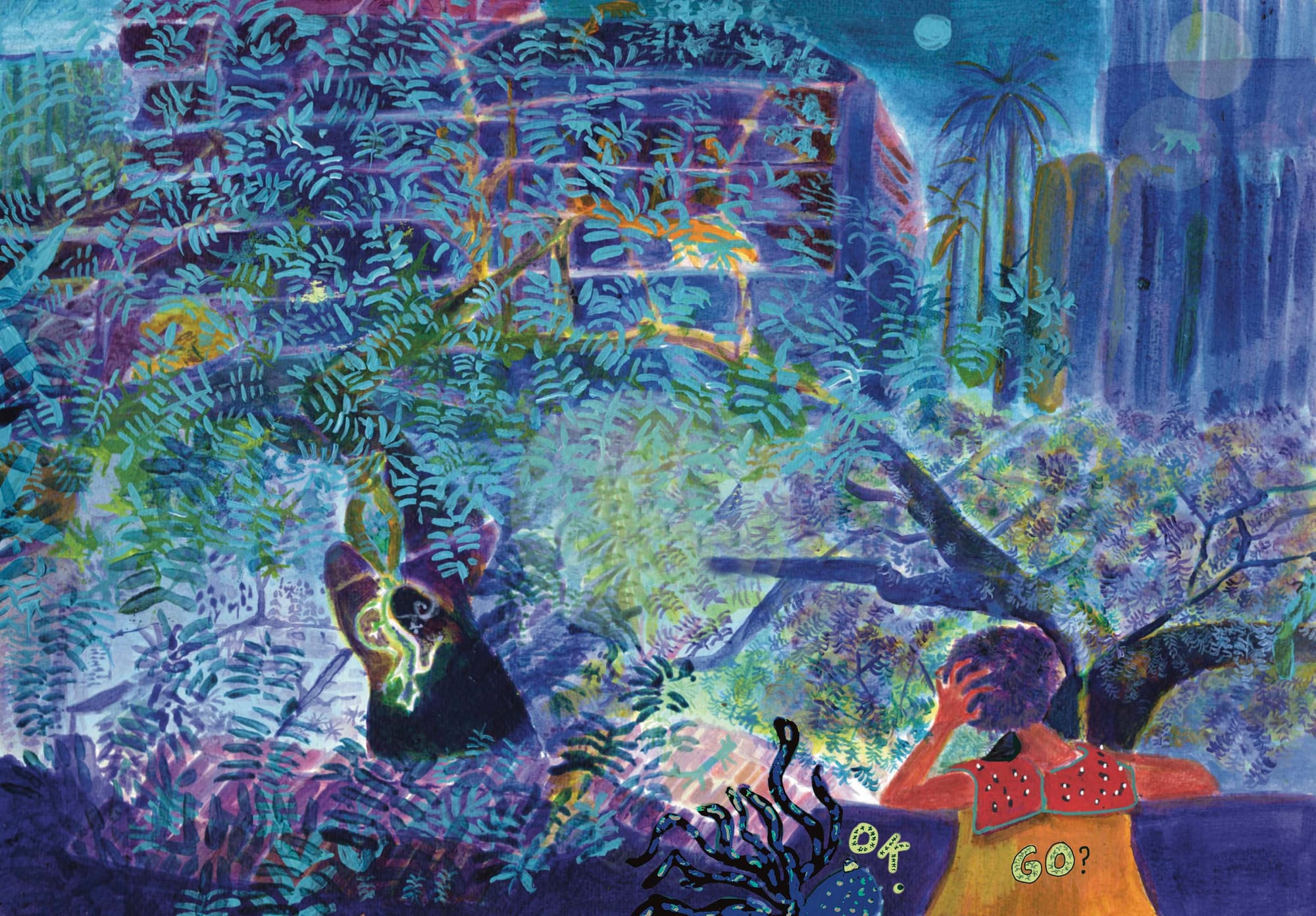
In my childhood home, the Neem tree was a way for everyone, including regular and occasional visitors, to find their way back to themselves.
I often caught adults lost around the open grille, silently observing the Neem tree. From them, I learnt to trust everything about the Neem tree, its leaves and their spreading fragrance, the chance to catch the buds being eaten by the birds and those that are left behind to flower into white dust that covers the crown.
I learnt to stop and gaze at the many creatures that find their repose. In observing, I grew into a round bud, or white flower, or a bird, or a squirrel, or a bhaam, ways back to the self.
An antidote to isolation
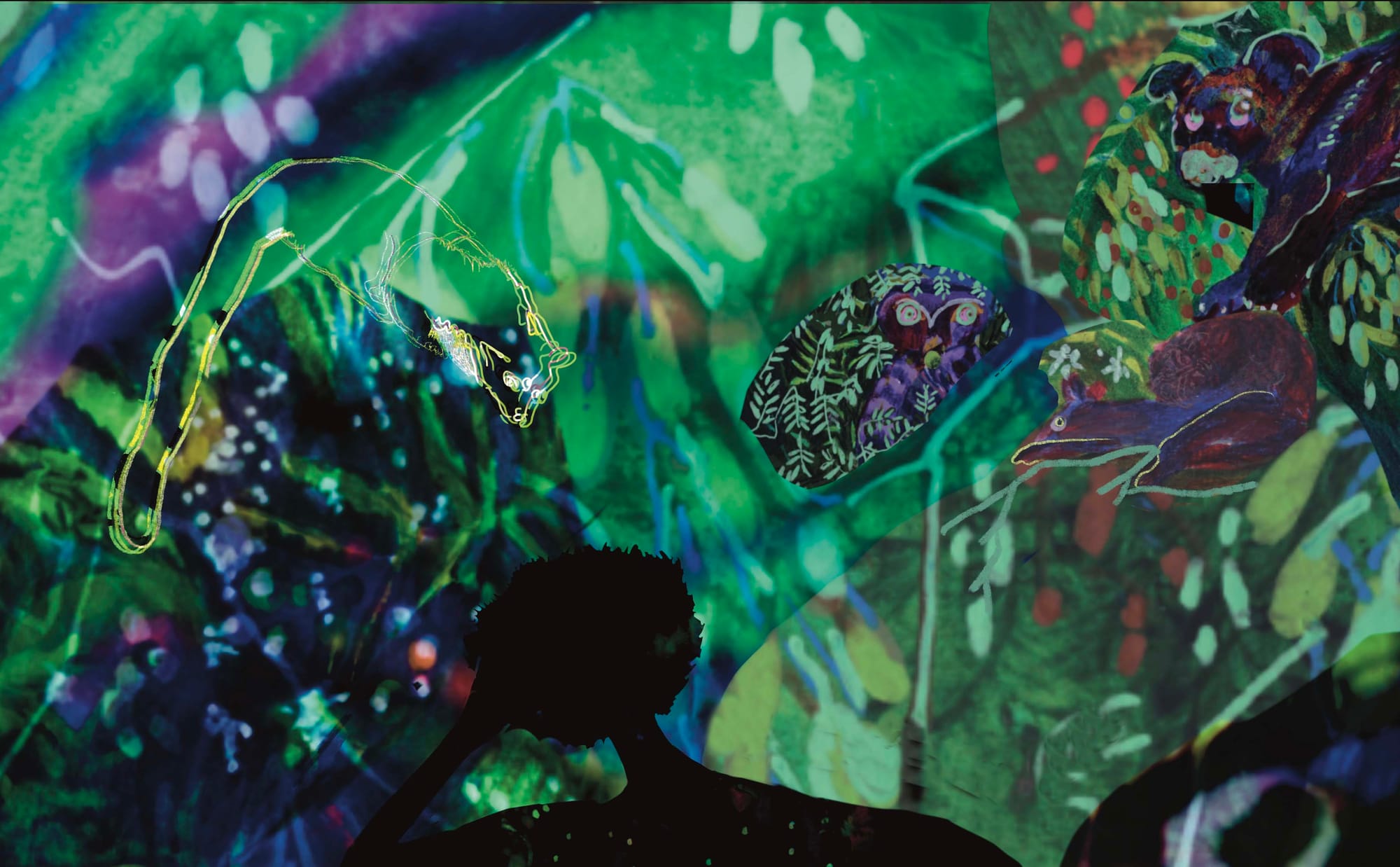
Today, when I smell Neem in an unfamiliar place, I find an antidote to isolation. I start winding my way to neighbourhood wisdom and grandmas who hold rhythms of a life that has worked through the ages for their people.
A confession, while I love sleeping in my own bed and my own room, I really like communal spaces and miss them with the same sense of loss as my Ma’s for ghost siyal.
But the greatest gift I take from my childhood is trusting the night and nocturnal with the same courage as the day and diurnal.
I learned to bring to the night an attentive observation. It has always responded with love.
Best,
Fulltime Hedgehog
Outro
Further reading. Explore the back catalogue of Debrief newsletters online for further writing around the world.
See more from Fulltime Hedgehog: On her instagram or Linkedin. She also makes the Mahua Silent Zine Project, a community art project for children.
Help us do more. The Debrief is free thanks to reader support.
Acknowledgements
I am grateful to Peter for wonderful conversations that made me feel so safe that my childhood came back to me in soft tones and colours. He has been kind with my thoughts as with my words while giving the piece the editorial flair it needs.
I am grateful that I belong to this community of readers and creators, whose works I enjoy reading and learning from, and who support this work. It is amazing for me to realise that there are people who I probably share values and concerns with and we all show up for each other on and through this platform.
I am grateful to all my family members, especially the women of my house, who have raised me along with a house full of cousins, and cared for us until we could share the care back and pay it forward.
I am grateful to my neighbourhood that demonstrates a collectivistic way of being-which is not perfect or without flaw, but which does act on the impulse of living with difference.
I am soul-grateful to all the creatures who continue to appear as presences in my life, to remind me to be less self conscious, fearful or obsessed.
To my neighbourhood Neem Tree, who taught me how to be grateful, what can I say? I simply love her and hope she thrives and lives an enduring life.