Writing Disability Rights
Tell us what disability rights mean in your life.
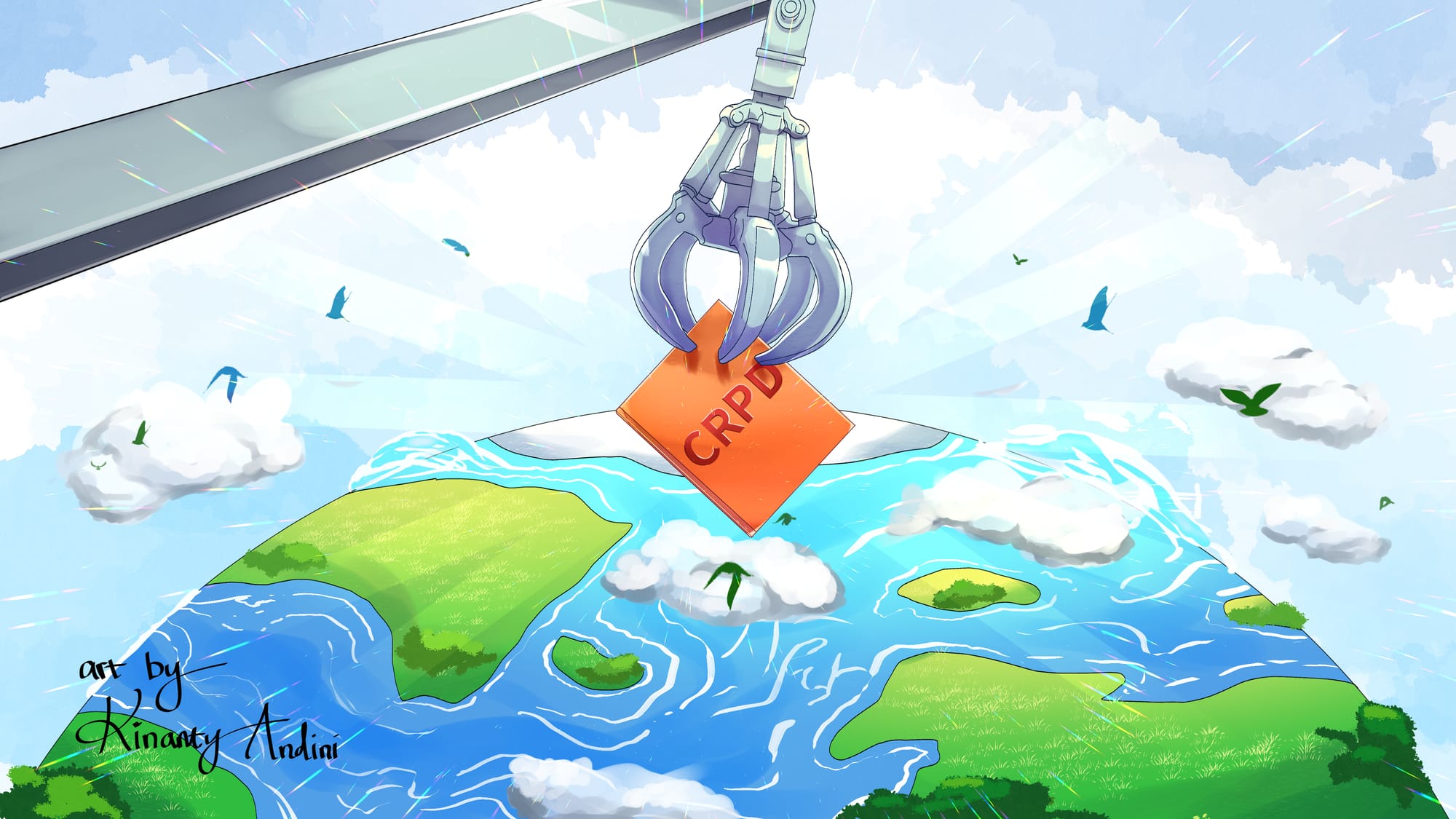
2026 marks twenty years since the adoption of the United Nations’ Convention on the Rights of People with Disabilities (CRPD). It sets out a dream of equality for persons with disabilities. But many disabled people do not feel its benefits.
Human rights are abstract things. Help us understand what they mean to you on a personal level. How is your life different because of disability rights? Show us how disability rights have played out, for better or worse, in your life, family, home or livelihood.
Send us a piece of up to 500 words:
- We will publish our five favourite entries.
- We will pay £100 for published entries.
- The deadline is 2nd November, 11am GMT.
If you have any questions or accessibility needs please contact Peter.
Contents
About Disability Debrief
Disability Debrief is a weekly newsletter that explores the world through a disability lens. If you don't get it in your inbox, sign-up here.
We can feature original work by writers and artists from around the globe thanks to reader support. Join those helping us tell disability stories in new ways.
Prompt
How have disability rights changed your life? And how does their presence or absence play out practically in your day-to-day?
Since its adoption in 2006, the CRPD has been the “cornerstone for progress” on how countries around the world approach disability. It's been ratified by nearly every country on Earth. (One notable exception is the United States, although the US does have its own civil rights legislation on disability.)
But even though the Convention and other disability rights legislation have been foundational for making changes, these laws are aspirational, and their benefits are unevenly distributed. They might also have had negative effects in some ways.
What's your experience? Share with the Debrief how disability rights have shaped your life over the last twenty years. Perhaps you've taken legal action, been granted reasonable adjustments at work, or had a voice in government.
You may or may not want to mention specific laws. But we are most interested in hearing how they impact your day-to-day: how you feel, the decisions you take, your ability to live in or out of community, the ways you socialise or make a family, and the life you've built.
What we're looking for
We’re looking for intimate and innovative storytelling that makes us think, laugh or cry. We believe that disability is a lens to understanding and describing the world in new ways.
- Tell your story in whatever way is authentic to you. Your unique voice is key to powerful writing.
- Give us specific details. Tell us the concrete ways that disability rights have (or haven’t) changed your life.
- We don't mind if your submission doesn't have perfect grammar. We will help with editing the final version.
- Submissions should be in English, but if you wrote it first in a different language, we'd love to see both versions.
- A global perspective on disability rights. When picking our favourites we'll prioritise diversity of geography, and especially entries from the Global South.
- We welcome submissions from people with and without disabilities.
- Do take a look at recent Debrief essays to get an idea of our style.
What to know
Writing Disability Rights is the third open call for writing from our community, after the success of Dear Disability Diary and Letters from the Future. In the Dear Diary call we received over one hundred and forty submissions, and published six.
Send us an entry interpreting the prompt (500 words or less). The Debrief uses a letter format, so write your submissions opening with something like “Dear Debriefers” and closing with a sign-off. We welcome greetings and sign-offs in languages other than English.
The process for submissions and selection is:
- Entries are open to readers signed-up to the Debrief (this is free, and you can unsubscribe any time).
- Every submission will be carefully considered, even if we cannot provide individual feedback.
- Shortlisted entries will usually go through an editing process.
- Favourites will be selected by Peter Torres Fremlin and Celestine Fraser.
- Our five favourite entries will be published in an upcoming edition of Disability Debrief, and paid £100 each.
On the use of AI:
- We ask for transparency about if/how you used AI in your submission.
- We prefer to hear your own words directly. We don't recommend that you use generative AI to write the piece. But if there is, say, an access reason it can help you, let us know.
- We also encourage you not to use AI to correct grammar or adjust your style. We will edit the piece and work with you to bring out your own unique style.
See more about how the Debrief approaches use of AI.
And our deadline for submissions is 2nd November, 11am GMT.
How to make a submission
Login or sign-up to make a submission.
Enter your email address, and then click through from your inbox. You’ll be brought back to this page and you’ll find the submission information here.