
“People mutually helping each other”
Dear Debriefers,
We're back to global disability reading and resources today. But before you dive in, please do:
- Fill in the Debrief reader survey.
Feedback helps me see what's working and what's not. Thanks to those who have already responded!
As for today, we look at the efforts being made by and for disabled people in Myanmar, the latest questions and answers in research, and confidence and distrust in business.
Plus, renewed support from the Debrief to other disability media, and a book giveaway for readers in the United States.
Browse highlights below, or explore the full guide of 89 hand-picked links: curated across 26 countries or 38 subjects. This edition picks up from the update in January.
About this edition
We can share disability news thanks to support from readers. Thanks to K. Li for another incredibly generous donation, and to Lucy and Vishal for continued support.
Peter Torres Fremlin is editor of Disability Debrief and is from the UK.
Sonaksha is an illustrator and designer from India.
“People mutually helping each other”
The military coup in Myanmar has left the country in a grinding civil war since 2021. Tom Andrews, the UN expert on the situation of human rights in Myanmar, documents the grim situation people with disabilities face and the efforts being made to support disabled people there.
As well as the existing challenges of disability in Myanmar – including the stigma and discrimination – the civil war have made things even harder. But I found Andrews' report particularly interesting on the situation of organisations supporting disabled people.
The military junta has cracked down on civil society, and international donor support has evaporated. Organisations are facing an “impossible choice” of submitting to junta control or to carry on, running the risk of arrest and imprisonment. Many have either gone underground or “been forced into exile”.
But amidst these setbacks, organisations, many led by disabled people themselves, continue work. And even some new ones are started. One young man who lost his leg while serving in the opposition People's Defense Force shared:
“To encourage other people, you need to provide inspiration and a practical way for rehabilitation. That is why I established [my organization]. We give opportunities to the [disability] community. ... If I am able help 10 people. Then those 10 people can help 10 people. Then [assistance] will be spread to 100 people, and they can help others. … We can provide a community that collectively supports each other; people mutually helping each other.”
And in a similar spirit, Andrews calls upon the international community to address the “hidden crisis facing persons with disabilities in Myanmar”.
- See previously on the Debrief, A Song for Freedom, where an activist shared the situation of disabled people in Myanmar's civil war.
Questions and answers
In Vietnam, coverage of disability benefits has “more than tripled over the last 15 years”, according to a brief from the International Labour Organisation. There are still serious gaps, including the money not being enough, but now 1.7 million people in the country get disability allowances.
In France, more disabled children are in mainstream education. 64% of children aged 6 to 15 getting disability-related support are now in mainstream schools, compared to 47% in 2010. On the face of it this is good news but there are questions about the extent of support the mainstream settings provide, so it's not necessarily better for the children in question.
Meanwhile, the International Centre for Evidence in Disability (ICED) in the UK is celebrating 15 years since its foundation. As well as reflections on the research the centre has produced, co-director Tom Shakespeare shares the questions still not answered:
“I would love to find out more about how people live with pain; I have a hunch that many families affected by disability spend money on medical interventions which do not work; I want to find out whether individuals with disabilities are isolated or connected. Both words and numbers might help us answer those questions. There is much more that needs to be done in the next 15 years.”
“Strong expectation of a positive outcome”
Inner confidence to challenge outer barriers. PurpleSpace, friends of the Debrief, have launched a video course to “develop the inner confidence of every disabled employee”. They define confidence as a “strong expectation of a positive outcome” and see it as a skill that can be developed by the employee.
I think this is an interesting approach. Yes, disabled people face untold discrimination and barriers in trying to get work. But that just makes it more important that we develop the skills to navigate them.
A power dynamic that is often extractive. Meanwhile, Tilting the Lens, also friends of the Debrief, have launched an “open-source playbook for fashion brands” to engage with disabled consumers. They see a key challenge in the “trust deficit”:
“the Disabled community distrusts and is frustrated with the [fashion] industry due to persistent issues that remain unaddressed. Disabled customers struggle to access products in physical stores and online. Product offerings are very limited and advertising practices are often poor. Disabled people are often valued by the industry only as customers, with inaccessible education systems and employment opportunities [... This] fails to develop trust and creates a power dynamic that is often extractive.”
“The words did not come out”
“The words did not come out”. In Nigeria, Esohe Iyare shares how people who stutter navigate barriers at work.
“No one has the right to decide whether someone can be a good mother.” A documentary from DW on forced sterilization in Europe, which is still legal in 12 EU countries. Activist shares her campaigning and networks across Europe challenging this practice.
80 years of change. In the UK, my friend Phil Friend shares a retrospective on the situation of disabled people through his lifetime. He takes us from his start in segregated education, to disability sport and the new attitudes, advocacy and legislation:
“My education took place in residential boarding schools for disabled children. These were well-meaning places, but nobody would mistake them for the fast track to university. I never sat an exam. Physical education was nonexistent. We did basket weaving and macramé instead. (Two skills I’ve rarely been asked to demonstrate since). Expectations were low, and the outside world felt a long way off.”
“Feeling of community and solidarity”
Thanks to the generous support you readers give to the Debrief, it is in a position to pay forward to other creators. I've been able to renew contributions of £500 each to two of my favourite writers on disability-related issues from the Global South.
By chance they are both from India, and they each open unique windows onto the world. Do join me in following and supporting their work:
- Reframing Disability by Priti Salian. Priti shares guidance on disability storytelling and brilliant profiles of disabled creators from around the world.
- Sanity by Tanmoy Goswami. Tanmoy tells stories about mental health through his own intensely-related lived experience and original research.
Tanmoy shared with me what this support means for his work, and how sticking together helps us get further:
“The biggest gift that the Debrief has given me is the feeling of community and solidarity. I have been writing Sanity for 5 years now, and it can get really lonely. Having the Debrief in my corner makes me feel seen. It inspires me to stay true to my values as a creator.”
And, as ever, I urge organisations working on disability advocacy to seriously consider supporting disability media and disabled creators. The modern media landscape increasingly hinges on individuals' ability to reach new audiences. We need you in our corner.
“All our stuff is not the same”
Song and dance for assistive technology: Apple's video “I'm not Remarkable”: “I need stuff. And you need stuff. And all our stuff is not the same”.
And in case you missed previous Debriefs...
- Onwards into the unknown: my disabled look back on 2025, with its setbacks and, for me, a new love...
- Broken then blooming: Debrief readers write back with their visions of a future where disability rights are real.
All best,
Peter
Outro
Further reading. All the links from these curated editions go into the Debrief library, which now has over 7,100 links from over 170 countries. See below for contents from this month's update.
Let your friends know. Sharing the newsletter is how people find it!
For more from Sonaksha, see their website.
Connect. Get in touch. You can find me on Linkedin and Bluesky.
Help us do more. The Debrief is free thanks to reader support.
Recent News
This update has 89 curated links from 26 countries and regions, organized across 38 subjects.
You can explore it organized by subject or by country.
Subjects
- Accessibility and Design
- Ageing
- Assistive Technology
- Black Lives Matter and Racial justice
- COVID-19
- Civil Society and Community
- Climate Crisis and Environment
- Communication and Language
- Culture, Entertainment and Media
- Data and Research
- Digital Accessibility and Technology
- Disaster Risk Reduction and Crisis Response
- Economics and Social Protection
- Education and Childhood
- Employment, Business and Work
- Gender Equality and Women with Disabilities
- Health
- History and Memorial
- Humanitarian, Migrants and Refugees
- Independent Living and Deinstitutionalization
- International Cooperation
- Justice Systems and Legal Capacity
- Lived Experience and Opinion
- Mental Health
- Mobility, Travel, Transport and Tourism
- Policy and Rights
- Politics and Elections
- Relationships, Sex and Reproductive Rights
- Sport and Paralympics
Countries
Acknowledgements
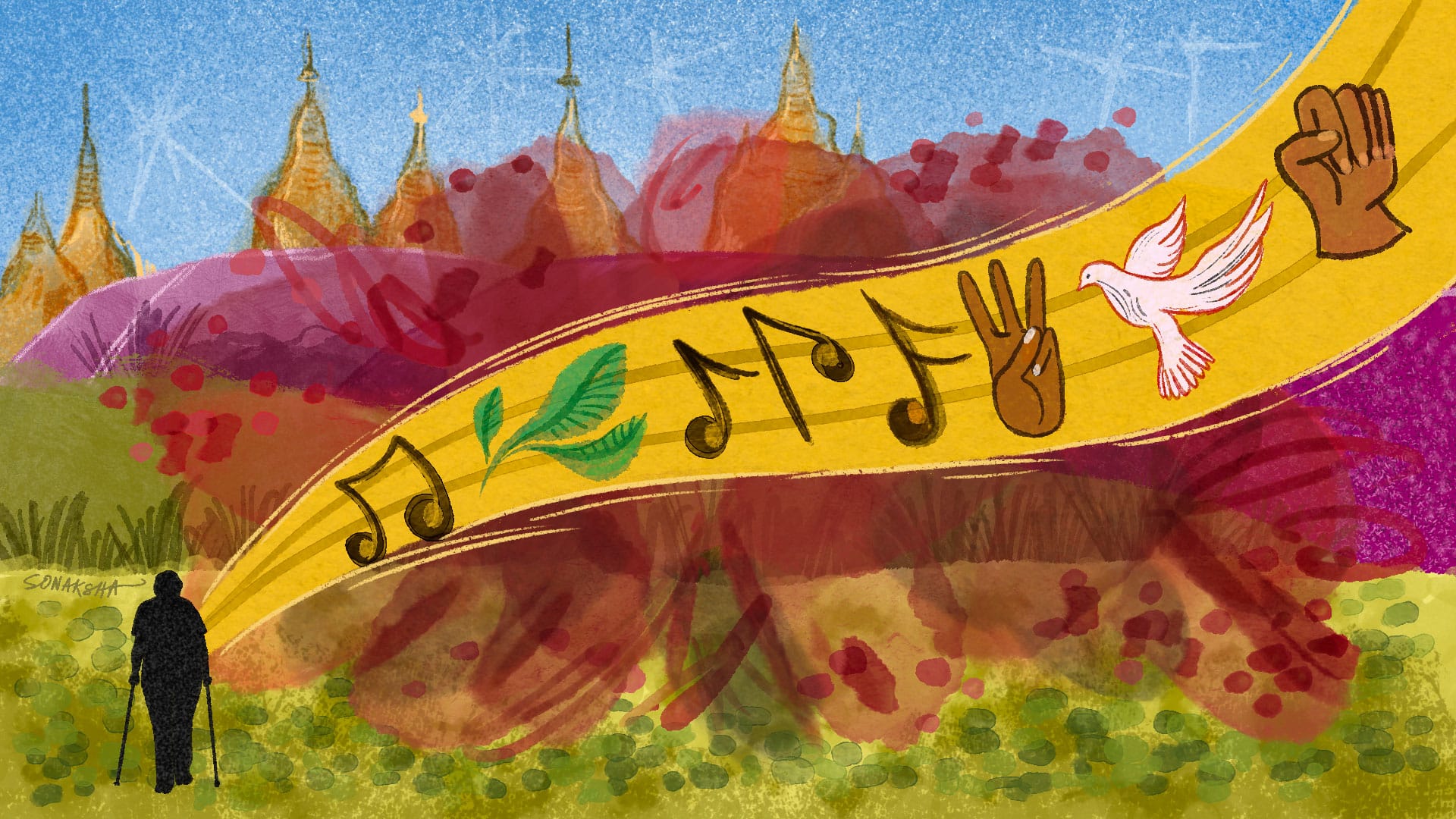
Thanks to Sonaksha for the beautiful illustration of activism in Myanmar.
And as always many thanks to everyone who shares links, news and reports, and the readers and organisations whose support makes this work possible.