Spotlight or Substance?
Dear Debriefers,
The Zero Project is an annual conference in Vienna that awards “innovative practices and policies” on disability inclusion, selected from around the world.
I first went in 2017, flying from Cairo. I could still walk, and travel by myself. And the sector was riding the wave of global attention to disability and a momentum in the work.
Last month I went for the second time, flying from London, with a wheelchair and an assistant. And funding cuts and backlash on diversity issues are threatening clouds over the sector.
At the conference I was invited to discuss the challenges of disability awards and innovation lists. I argue that the networks they create don't always benefit disabled people, and that we need more space to talk about what doesn't work.
This edition shares my time at the conference, looks at the Forbes Accessibility 100 List, and reflects on the changing climate of disability work.
About this edition
The Debrief gives an independent view on disability initiatives thanks to support from readers.
Peter Torres Fremlin is editor of Disability Debrief and is from the UK.
First time in Vienna
Back in 2017 I was based in Egypt, learning Arabic. My work was mostly outside Egypt, consulting with organisations on disability inclusion. Going to the Zero Project was a mark my career progress, and an opportunity to meet folk I'd heard of but who didn't know me.
I was still walking then. The conference is held at the UN, and I found my taxi couldn't get me right to the entrance. And then past security on the inside there was a further walk to the conference area. At the end of the day I struggled back to the road. Afterwards, I wished I'd arranged a mobility scooter.
The 2017 conference was on employment, which was my main topic then. But it was featuring “innovations” that I wasn't so sure about. So I proposed a discussion of “bad practices”, to talk about how come approaches that don't get disabled people into meaningful work somehow still persist.
Getting into the conference bubble
Now in 2026, I'm back in the UK, using a wheelchair full-time, and I can't travel alone. I got back in the air last year, so I was less nervous about the flight. But I was nervous about the effect of cold weather on my body.
Travelling with me as an assistant is Peter, who is also my physio of some years and a good friend. (His time is paid by Access to Work, a UK government programme supporting disabled people at work.)
We fly a day before the conference, from Stansted. There's another wheelchair user waiting for assistance to board our flight. “Weird question,” I open, “but are you going to the Zero Project?” Yes, she is, and soon we find that the other person in the assistance queue is also going.
Arriving in Vienna I get my chair back. Peter finds a piece is missing, but it's not an essential one. The next day we can take the U-bahn to the UN. Using a wheelchair it's no problem for me to wheel around the entrance to find the right way in.
Zero Project 2026
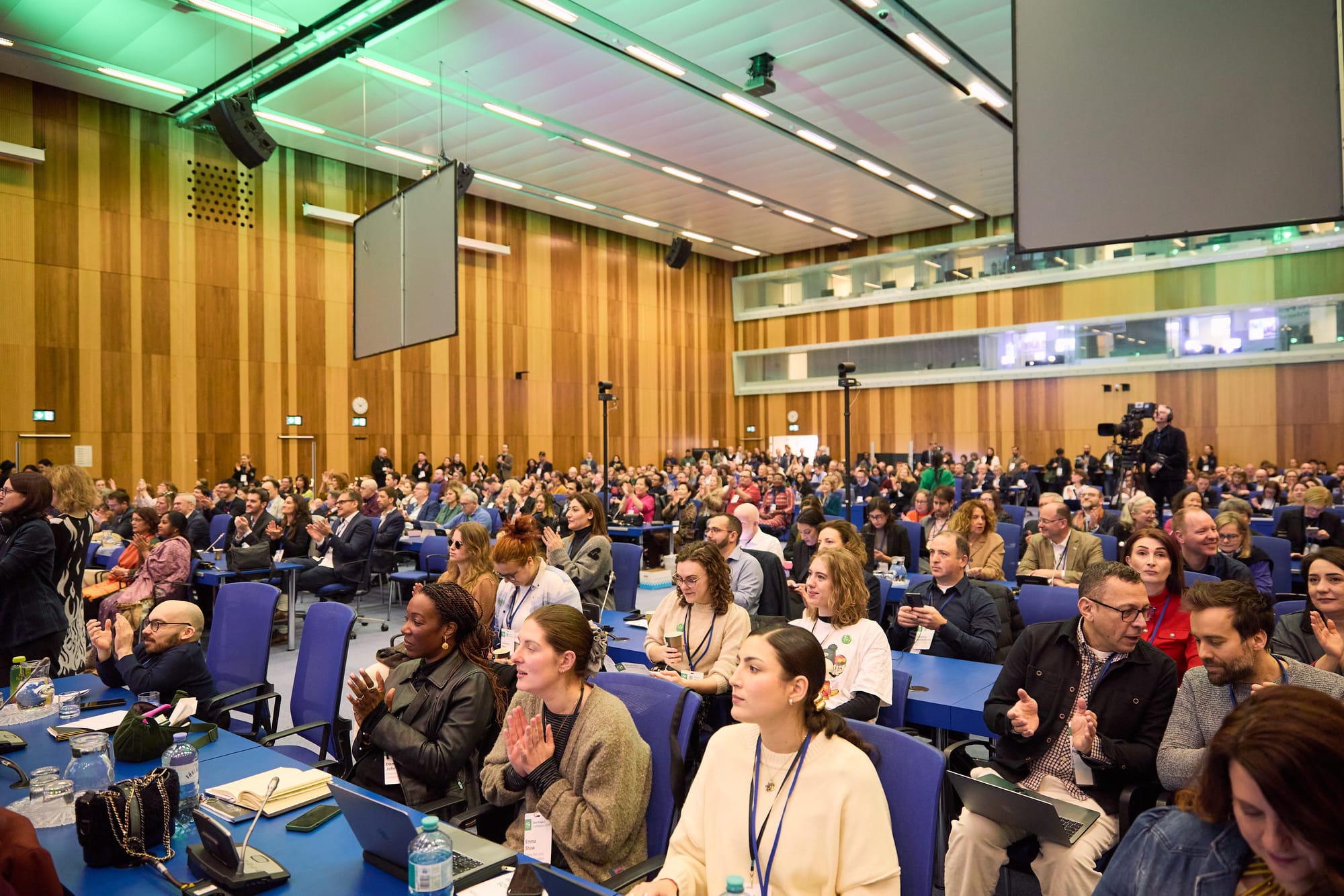
The Zero Project is a conference that awards “innovative practices and policies”. This year the themes were accessibility, ICT and crisis response.
There is an incredible range of awardees, which you can see in the conference report. They come from 51 countries and among them are a community kitchen run by Deaf persons in the Gaza strip, accessible art exhibitions in the São Paulo metro, and an inclusive circus in the United States. (There's also a dedicated report on disability-inclusive crisis response.)
One that stood out for me was in e-commerce in China. Alibaba Foundation supports persons with disabilities selling things like clothes, food or beauty products on Taobao, their online shopping platform:
“In 2024 online stores run by retailers with disabilities completed more than 7.35 million transactions, generating total sales exceeding RMB 600 million (app. $84 million). By June 2025, over 5,000 merchants with disabilities had received support.”
Of course I still have some of the scepticism that I felt about “innovations” in 2017. There are many initiatives that are harder to evaluate if they actually benefit disabled people or not. This is particularly the case in new apps or technologies: they might sound great, but that doesn't mean people use them.
Spotlight or substance?
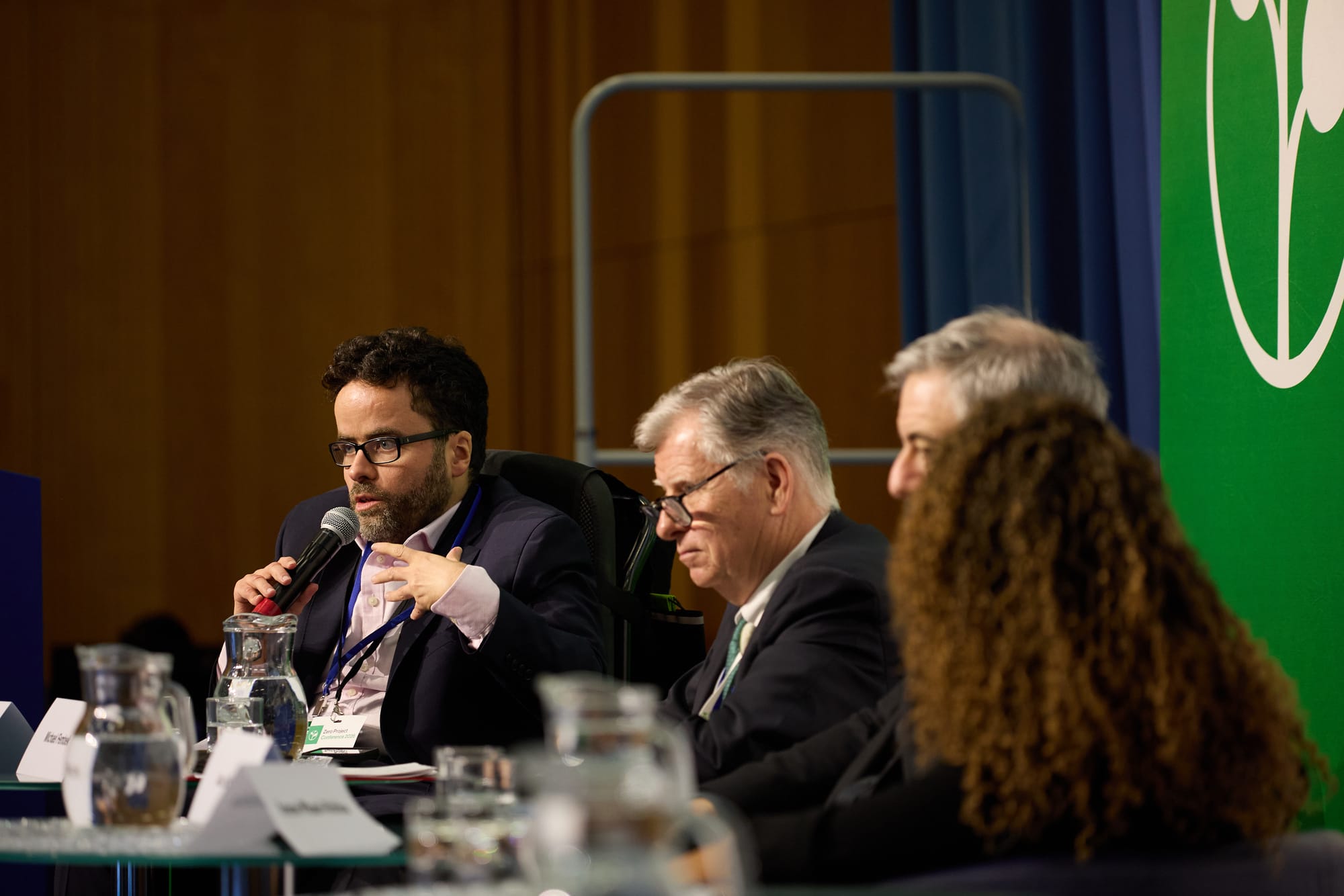
I was invited onto the main stage, for a panel called Spotlight or Substance? It was a chance to talk about disability inclusion lists and awards. (You can watch a recording.)
Michael Fembek, CEO of the Zero Project, describes how they identify innovations. Alan Schwarz talks about his work to create the Forbes Accessibility 100. And Irene Mbari-Kirika of inABLE tells us about raising awareness of innovation in assistive technology in Africa.
I was invited for my critical views. I acknowledge that recognition is important. Living as a disabled person is often complicated, and working on disability has a lot of barriers too. To have one's work acknowledged is very meaningful.
But being put on a pedestal is not innocent. My experience being on a disability power list in the UK made me ask how the award-giver benefits too. It can create a stage for large charities and big businesses to reinforce each other's narratives, distant from the experience of people with disabilities.
Another challenge with “innovations” is evaluating a practice in its wider context. For example, this year the Zero Project awarded Meta's Ray Ban AI glasses for the supposed assistance they provide people with visual impairments. But that is done without any mention of the privacy and other issues these glasses raise, let alone the other concerns we might have with Meta.
We do need ways to recognise disability work, and the individuals and organisations doing it. But our sector needs to have more space to talk openly about what does and doesn't work. We shouldn't unquestioningly accept the narratives of giant corporations. A well-connected ecosystem patting itself on the back doesn't benefit disabled people.
“You've made the list. Now maximize its full value.”
Underneath my comments was an awareness of criticisms made specifically of the Forbes Accessibility 100. Dom Kelly, of New Disabled South, was featured on it, but felt that it was “not representative of our field”, particularly questioning the place of corporations on the list.
After the panel, I hear from several others also on the Forbes list. They tell me that, even as non-profit organisations, they were bombarded with emails from the Forbes marketing department after getting on the list.
Those featured on the Accessibility list are encouraged to “maximize its full value”, and “leverage the power of Forbes Accolades”. There are different “opportunities” at different price points.
You might want to license the Forbes awards logo. Or, amplify your recognition through a Platinum offer, which at $9,500, includes advertising and an Enhanced Forbes Profile. Or, go for the Elite: $20,000 annually gets executive profiles and a “thought leadership article on Forbes.com”.
After our panel, I asked Alan Schwarz, who authored the Forbes Accessibility list, how offering paid promotions influences selection. Alan responded that there was no fee for being on the list, and that:
“At no time were advertising or business considerations ever involved in or even relevant to the Accessibility 100 (or the upcoming Accessibility 200). Any suggestion otherwise would be 100% incorrect.”
My own approach to maximising value
Before my panel I see a great talk from Niki Lilly on new digital barriers experienced by people with facial difference with facial recognition technologies.
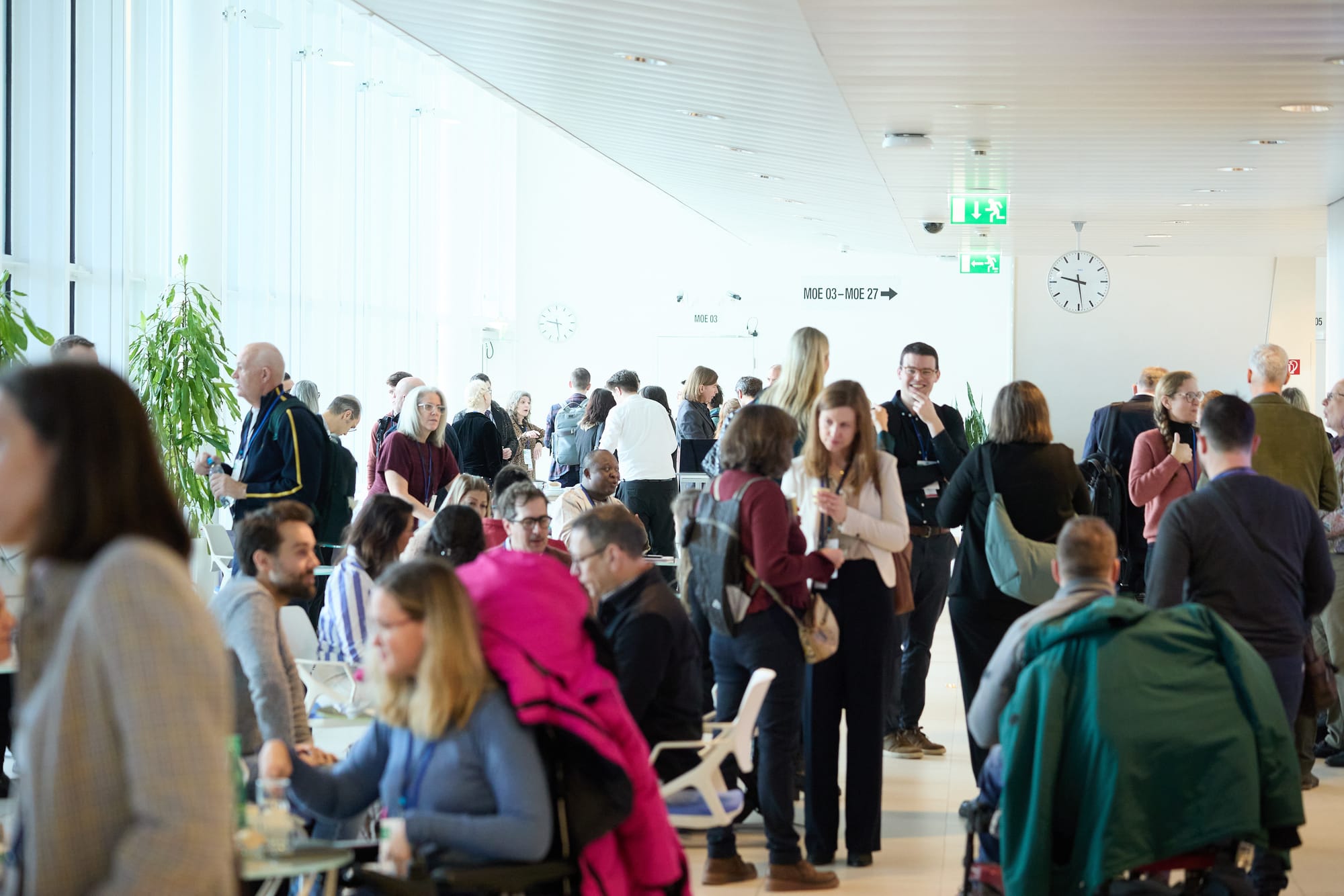
But outside of that, I don't go to any of the sessions. I have back-to-back coffee meetings. Some folk I have known for over a decade. Many others I am meeting for the first time. Going through the corridors I bump into people I haven't met for years, or only know from working online.
I was wondering how much I would find people reeling from funding cuts and backlash on diversity issues. But the Zero Project attendees are a largely positive crowd. And many, especially those working on disability inclusion in business, seem to be making good progress and finding a way past (or around) the backlash.
The positivity is also the result of who is in the room. The Zero Project attracts a mostly professional crowd – much fewer from activist or movement organisations than there were at the Global Disability Summit. And those that lost funding (or their jobs) in the last year are, after all, much less likely to come.
Sub-Zero Project
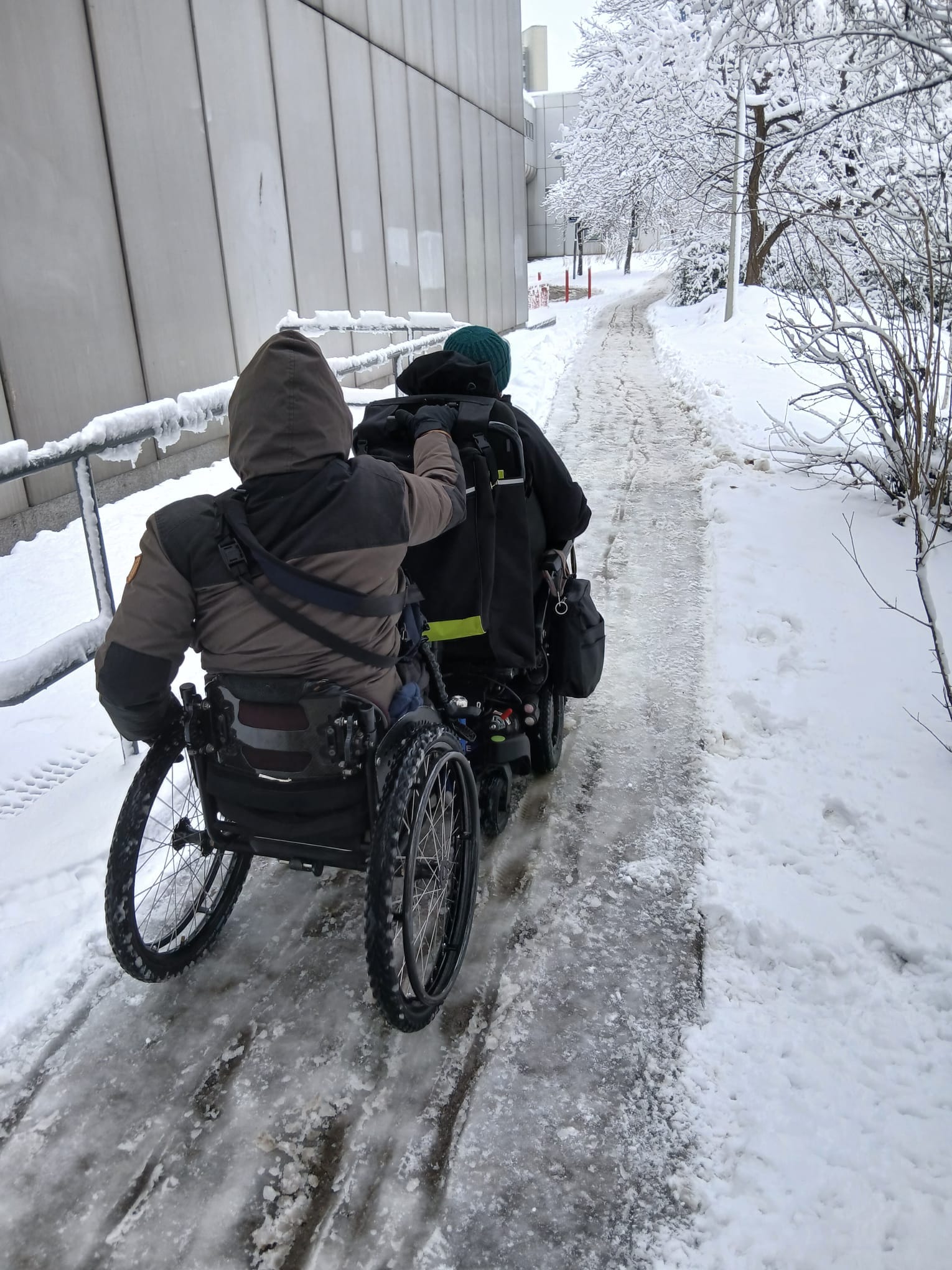
There is thick snow overnight before the third and final day of the conference. I marvel at it outside my hotel window but also feel trepidation. I've not taken my wheelchair out in the snow before.
The pavements and roads are impressively clear. But the snow has been swept to the side of the road, leaving a pile to rush through as you go up a curb. I revv through. Mostly my chair is fine, although on compacted snow I need a push.
On the U-bahn I meet a friendly Australian wheelchair user, Ryan. We find that the path from the station to the UN hasn't been cleared. For a moment (pictured) we try going in convoy. That turns out not to be efficient, so Peter gives Ryan a push, and I go on ahead, sliding up the track.
There are a fewer people on the third day, and apart from those who need to worry about cancelled travel plans, it gives the day a cosier feel. We can take longer for conversations.
Changing climate of disability work
It's gratifying to see the results of efforts developed since I was last in Vienna. It's great, for example, to meet those that came with the Light for the World We Can Work programme in African countries, which I heard about from its start some years ago.
But even though the spirit at the conference was largely positive, it didn't take much to scratch the surface.
When I meet folk from the US I ask how they are doing under the current administration. They tell me about ICE in their neighbourhood or other ways they, their families and communities have been impacted by the wrecking ball of the Trump presidency.
And it's harder to look forward, especially in terms of international efforts. Events like these used to be about harnessing a worldwide momentum. But we're all more aware that international solidarity and exchange now run counter to global forces.
I got the sense that many feel a vacuum in leadership of international disability work. Funders are retreating, rather than pushing forward on their investments. And folk don't seem to be finding a response from the disability movement that matches the moment.
What does winning look like?
One person trying to match the current moment is Meier Galblum Haigh, founder of Disability Culture Lab in the US. Meier was one of the people I met for the first time last month, and a question they asked stayed with me: “What does winning look like?”
Meier explained why it's important to ask for disability organising:
“We have found that organizing around fear, hate, or anger pushes our people into despair. So while we resist, I dream of liberation and winning. That brings me joy. It brings me purpose. We need to offer a vision as an alternative to this hellscape if we want to win it. Without a vision for winning, I think disabled people will be stuck between resistance and incrementalism forever, without achieving any real gains.”
Coming together
I didn't come away with Vienna with an answer to Meier's question. Filling three days with coffee meetings is disorienting. But it is energising.
Judith Hermetter, of the Zero Project, sums up the feeling attendees take away as “confidence”, individually, and beyond:
“Coming together during the conference also boosts confidence for us as a community. At this time when everything - from conversations to funding - tend to be harder, it means a lot to share this space with people you don't have to explain yourself to.”
Coming back to the Zero Project after nearly ten years gave me confidence too. I moved about the corridors differently, scooting quickly in my chair rather than needing to guard my energy. And my own space in the sector has changed, as more people know me through the Debrief.
I work from home. But work on disability has always had an isolation to it, wherever it's done. By definition we're in a minority, there are many barriers to what we want, and many people that we need to convince. Coming together with others in the same fight is one of the essential fuels to keep us going. We've got a long road ahead.
Looking forward to Vienna in 2027,
Peter
Outro
Further reading. See more from the Debrief on the international disability movement.
Let your friends know. Sharing the newsletter is how people find it!
Connect. Get in touch. You can find me on Linkedin and Bluesky.
Help us do more. The Debrief is free thanks to reader support.
Acknowledgements
Thanks to photographs from Zero Project / Rupert Pessl, and to the one on the snow by Peter Vaughan.
Thanks to Celestine Fraser for revision of a previous draft and photo selection. To Peter for being such a great travel companion, and making it possible to go. And Access to Work which is facing serious cuts, for funding Peter's trip.
Thanks to the Zero Project for such a warm welcome, a beautiful event, and making a space for an important conversation.
And thanks to the readers and organisations (of which the Zero Project is one) who support the Debrief.