
Onwards into the unknown
Dear Debriefers,
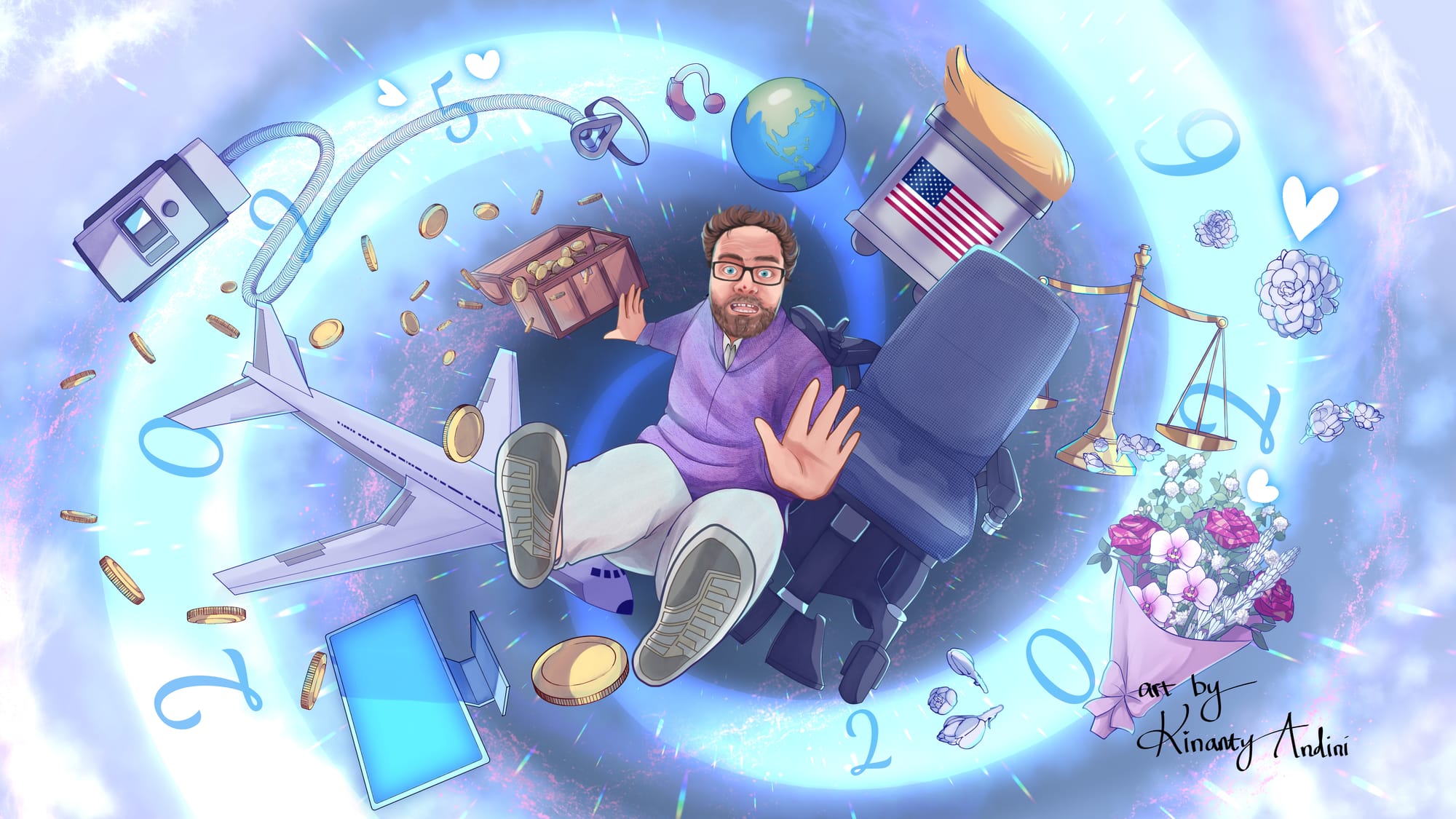
In 2025 I took my first flight in over four years, started using a machine to help me breathe at night, and fell in love.
As for the wider world? This year was the most significant setback to global disability rights in my lifetime.
This is my view on the year that was, and why I've got my seat-belt on for 2026.
See previous years: 2024, a long break-up, and 2023, a disabled farewell.
The Debrief is taking a month off publishing: see you in January!
Telling more disability stories in 2026
Disability Debrief is a reader-supported publication. We are fundraising to continue our work in 2026.
Many thanks for new contributions to Amélie, Amy, Disabled Peoples' Organisation Denmark, Emilia, Helen, Joanna, Julia, Katherine, Kathy, Kim, Kishore, Lina, Loreta, Lorna, Megha, Sander, Tessa and Yazmine.
You can support our work by sharing the Debrief or contributing financially, on a one-off or recurring basis.
Peter Torres Fremlin is editor of Disability Debrief and is from the UK.
Kinanty Andini is an illustrator and digital artist from Indonesia.
“A thrilling new era”
As Trump started his second term in January, he promised a “thrilling new era”. My heart beat fast as I tried to comprehend how quickly he was breaking things.
I started hearing from people in Washington DC how the changes were cascading down, and soon I was hearing from my friends from Cairo to Cox's Bazar about how their programmes for disabled refugees were being stopped.
The abrupt axing of US foreign aid was summarised by Nicholas Kristof as “The World’s Richest Men Take On the World’s Poorest Children”. It's estimated that hundreds of thousands of lives have been lost as a result.
At first the urgency of reporting on these changes gave me adrenaline. But then I felt profoundly deflated by the ease with which Trump and Musk so vainly boasted about the destruction they caused.
Mobility slowly slipping
Over the past few years I've been rehabilitating from a broken leg and subsequent hip replacement. 2024 was the year that my rehab stalled.
I use a wheelchair but I still walk as a hobby. I take a few steps across my living room with my walking stick, take a seat on a bar stool, open TikTok on my phone, and then walk back.
The amount I walk changes according to the time of day, how I slept, the season. In the winter my limbs are less flexible, so I walk less. The variability means it's hard to see the trends. After all, it's just a bad day, or a slower month.
This March I was managing about a 3 metre walk. I saw with shock that twelve months before I'd sometimes been able to do 10 metres without sitting down. Slowly, things slip. Then suddenly, I realise.
Take-off
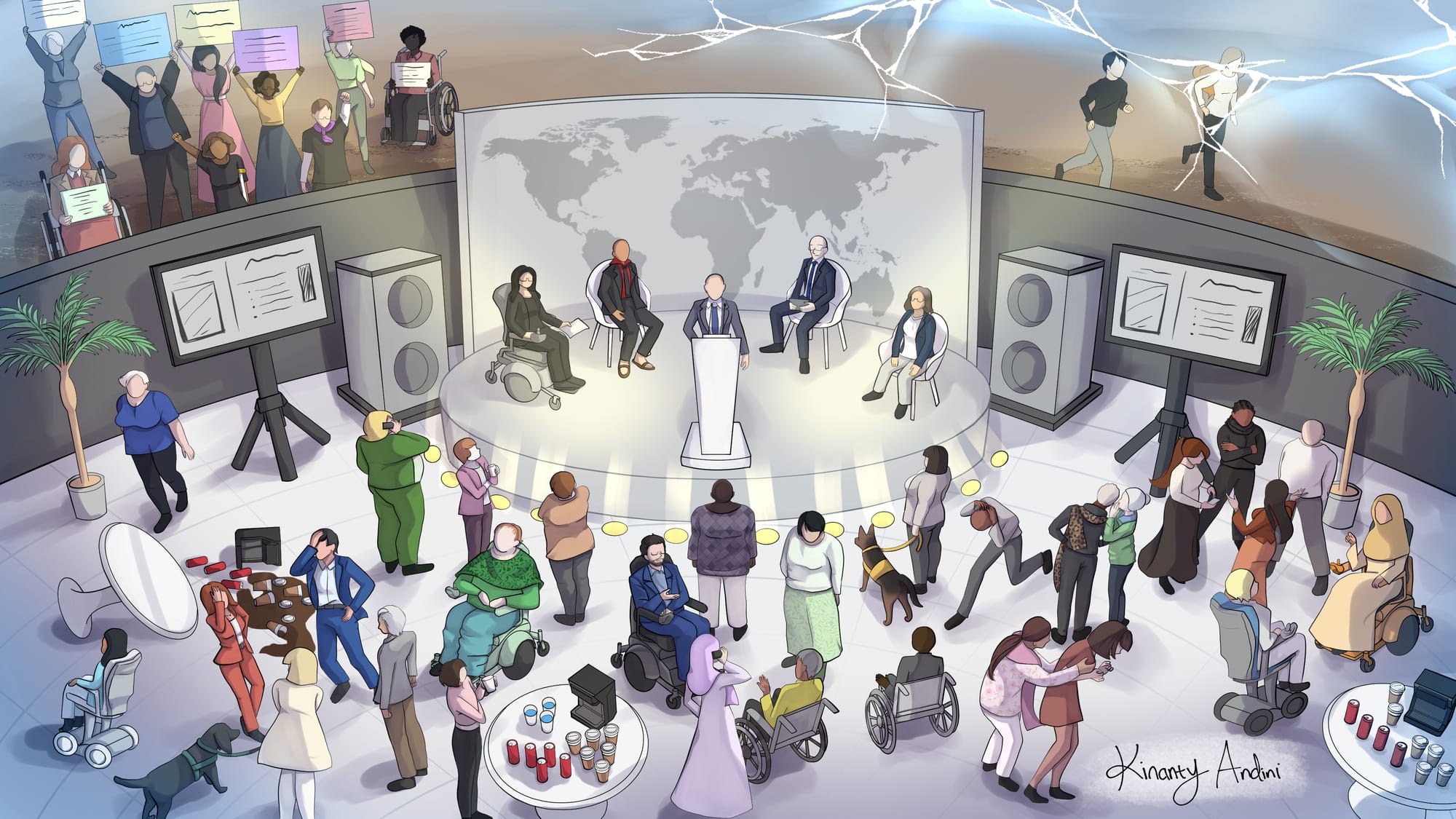
A turning point to my year came with a trip to Berlin for the Global Disability Summit. One of the Summit's hosts was the International Disability Alliance – and I've given them a hard time on this newsletter – but it turns out I owe them and the other organisers a thank you for choosing Berlin.
Travelling to Germany was my first air travel since coming back to the UK from Egypt in 2020, my first flight with a wheelchair. And with long days of non-stop talking, the summit itself was a revitalising gathering.
And even though I'd never been to Berlin before, it turns out many of my friends had ended up there. So I stayed another few days after the summit.
Up in the clouds
One of the friends I was meeting with was Anne, a Dutch woman I know from our days in Cairo. Over the past few years we had become closer, and leant on each other through life's ups and downs.
After our many hours of phone calls, it was good to be in the same place, see the city, eat together, to talk into the evening, to hug. I left Berlin with a kiss on the cheek that I was hoping meant something more.
We soon figured out that it did. And as we started a relationship based on years of friendship, the next few months were filled with the magic of tumbling into love.
Finding joy in my personal life seems an ever-more important antidote to the state of the world. And more than once I've needed my love's shoulder to cry on.
Onwards into the unknown
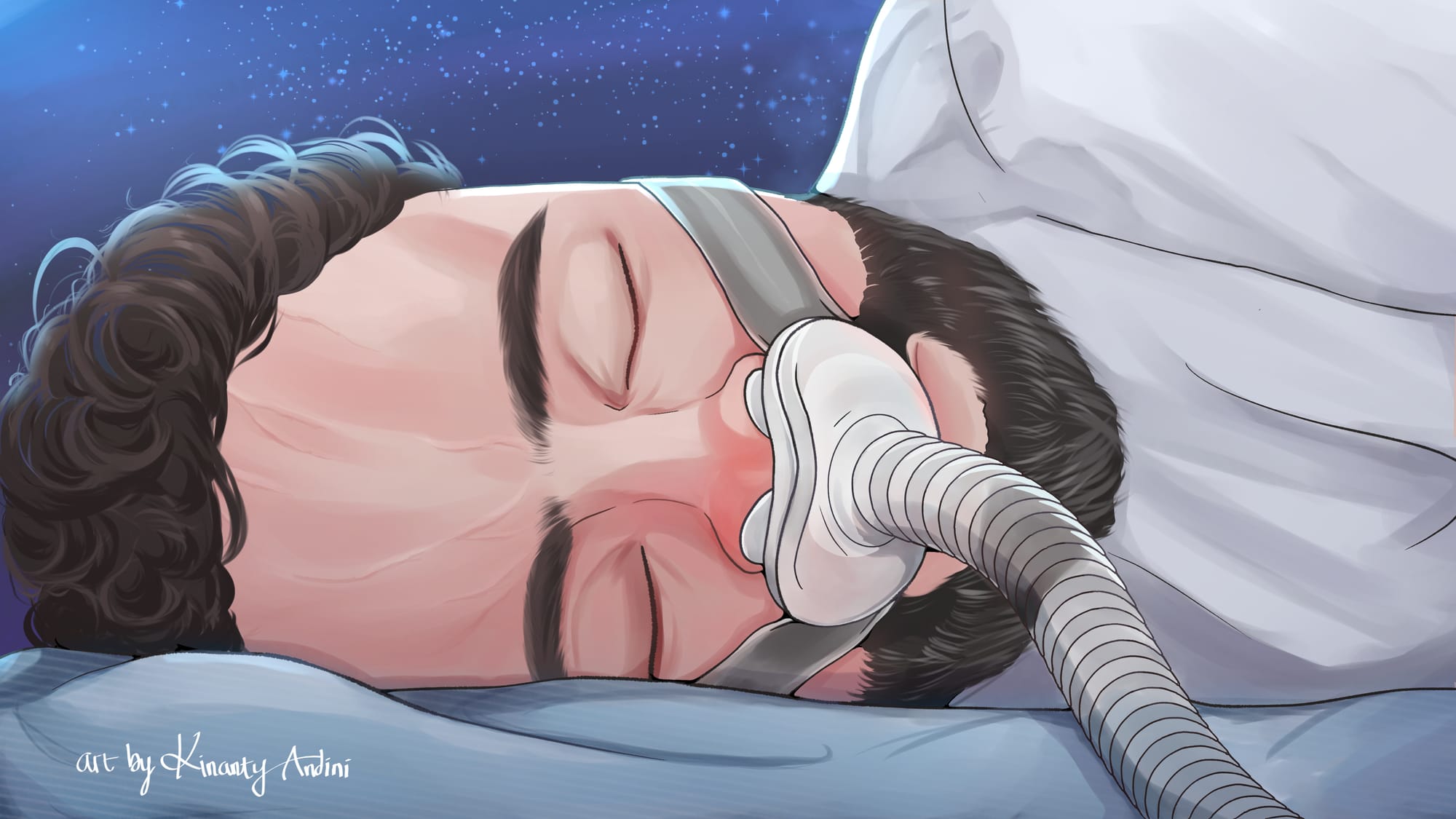
After coming back from Berlin I found that my muscles getting weaker meant I now needed assistance breathing at night.
Soon after that my dear friend Pedro passed away in Brazil. Like Alice Wong who passed last month, Pedro was a role model in disabled life. With both of them gone I feel like I have lost some of my future.
I quizzed my neurologist to know what might come for me. How long can I expect to manage at home by myself? How long can I expect to live? She said she didn't know.
Our global prognosis is also hard to comprehend. We feel the impacts of climate change more each year but aren't stopping it. The genocide in Gaza just got worse. And the world's most powerful men continued to drive the world off course.
And as all of this happens, hundreds of billions of dollars are invested in artificial intelligence. There are some great functions of this tech – including as an assistive tool – but it has filled our digital lives with an alienating, truth-defying, slop.
The most significant setback to disability rights in my lifetime
Progress on disability rights is one of the great social changes of the past decades. Of course there are many challenges and the gains aren't anywhere near as tangible as we'd like them to be. But nearly all governments had come to agree they were a good idea.
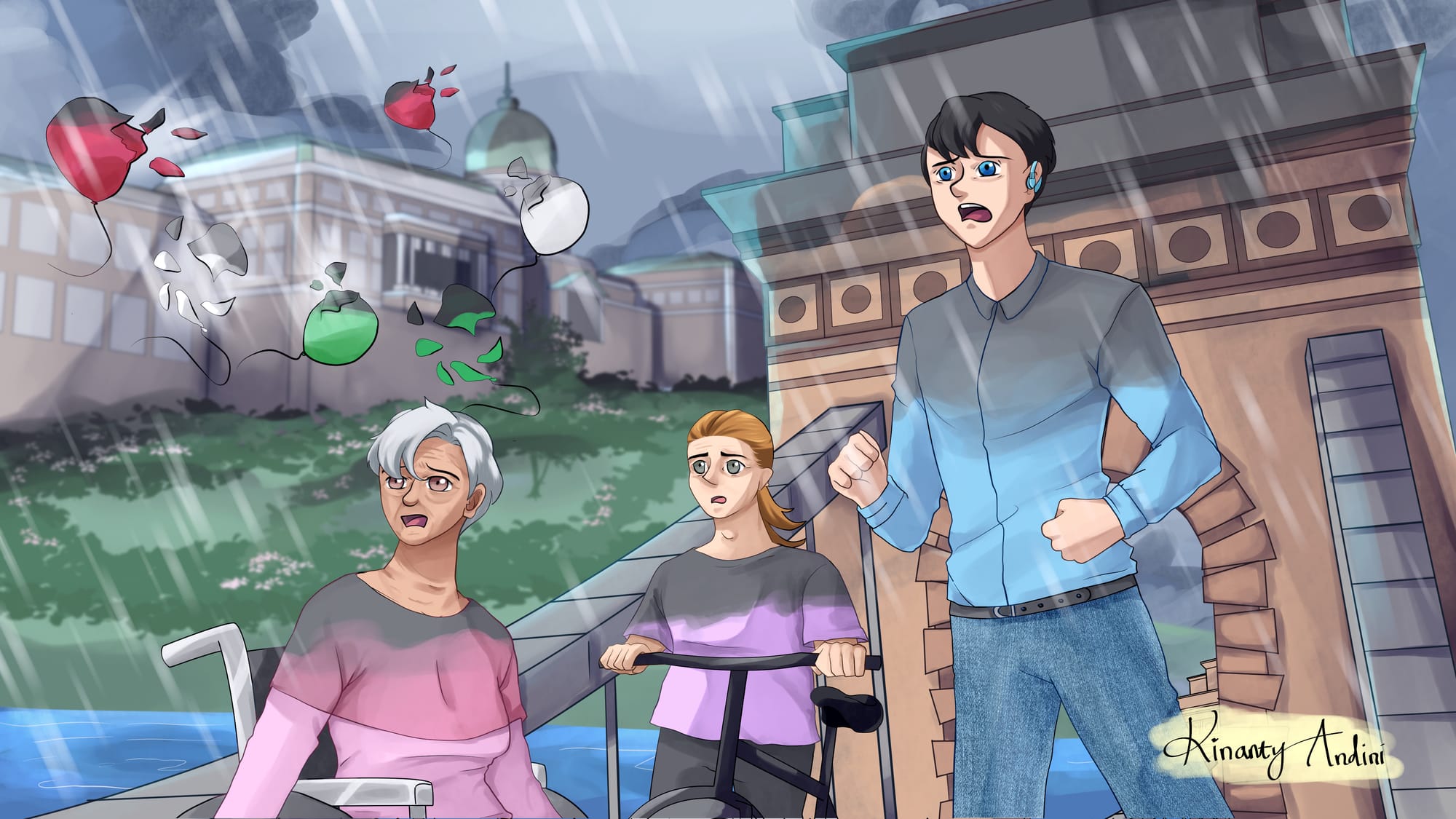
Until this year. The Trump Presidency led a backlash against diversity and inclusion that has already had global repercussions. Where the country used to set a good example, it now sets a bad one.
The United States helped to invent and spread disability rights frameworks around the world. Now it innovates in the way these (and other) rights can be undermined, our differences turned into a reason for scorn. And the international organisations that helped to secure and promote these rights frameworks are undermined or attacked.
And too many of these are part of, or fuelling, global trends. There is a shrinking space for the civil society organisations that could speak on behalf of disabled people. Harsh austerity measures cut through disability services at home and countries also cut the support they give overseas. Stigma and disinformation is promoted by the leaders we had hoped would protect us from them.
A setback is not a defeat
My life, and that of many others, are embodiments of the opportunities that disabled people secured.
This summer I set out to travel back to Berlin to see my love. I was able to travel across Europe by train. And in Berlin we could find an accessible Airbnb and use the trams, buses, and trains. Very little of this accessibility existed when I was born.
There are many gains of the past decades to build on, to fight for. And as the ground shifts beneath us, we will, as Alberto Vásquez Encalada wrote, need to find a new playbook for the disability movement.
Some are already finding it. For each setback to disability rights this year, there has been resistance and protest from disabled people, from Paris to Dhaka to Seoul. We are here, claiming our futures.
Wearing a seat-belt
We go into next year knowing some of the political challenges ahead of us. Whether it's in our work or our personal lives, we try to adapt and to make and remake the choices for the inclusive world that we want to see.
A few months ago I restarted talk therapy. It helps to have somewhere to leave the heavy weight in my head. And as for my heavy legs, my walking is tough again in the winter months. I try to practice each day, a metre at a time.
I'm looking forward to getting back up in the air in 2026, and going back to Berlin soon. And with the lesson learned by a recent tumble out of my wheelchair, I've started wearing my seat-belt. I get the sense that I'll need it.
With love for the new year. See you in 2026,
Peter
Outro
Further reading. There is a back catalogue of Debrief newsletters online, as well as a library of disability news from 170+ countries.
Let your friends know. Sharing the newsletter is how people find it!
For more from Kinanty, see her on Linkedin.
Connect. Get in touch. You can find me on Linkedin and Bluesky.
Help us do more. The Debrief is free thanks to reader support.
Acknowledgements
Thanks to Kinanty Andini for the illustration for this edition, and for such a beautiful series of work on the Debrief this year.
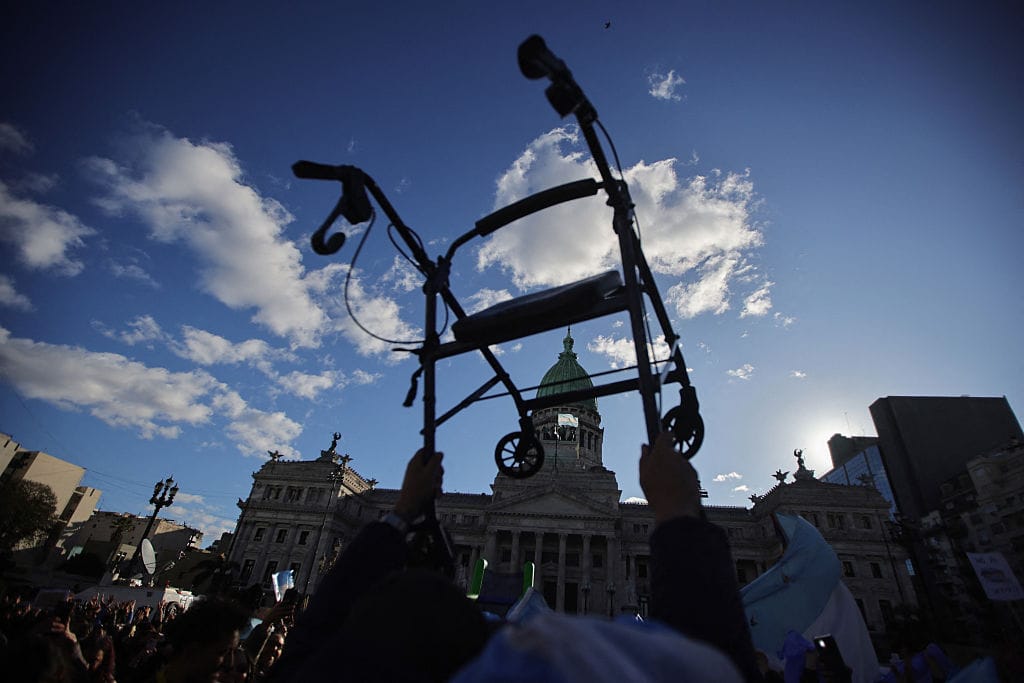
Press photo by Emiliano Lasalvia / AFP via Getty Images.
Thanks to Celestine Fraser for revising a previous edition, and to Dominique and Elizabeth for conversations that helped me think through the end of the year.
Thanks, of course, to Anne.
And to all of you Debriefers for being such a big part of my year.