
“My story is truly the American dream”
Disability Debrief explores the world through a disability lens. The articles are open and available to all thanks to a pay-what-you-can model.
Dear Debriefers,
Are the political tides turning? The US vote saw a rebuke to the Trumpian backlash against diversity politics.
In this edition we meet Josh Turek, one of the Democratic senators brought in by voters, and see how he understands his disability story in the American Dream (as well as who he would keep out of that).
We then go on a world tour of news, from the disability movement in Spain, violence faced by disabled people, and the millions made from disability fraud.
In an edition that ranges from Madagascar to Canada, we see the latest in international policy and inclusive trick or treating.
Explore the full guide of 127 hand-picked links: browse across 45 countries or 38 subjects. This edition continues from the update in October.
Peter Torres Fremlin is editor of Disability Debrief and is from the UK.
With thanks for new support from Marcie and Rémi.
“My story is truly the American dream”
The midterm elections in the United States saw a historic rejection of Trump and his Republican party. Part of this was a rejection of Trumpian intolerance, and on a night of many firsts, voters elected to the Senate the first Muslim, and the first openly gay man, and the first Native American woman.
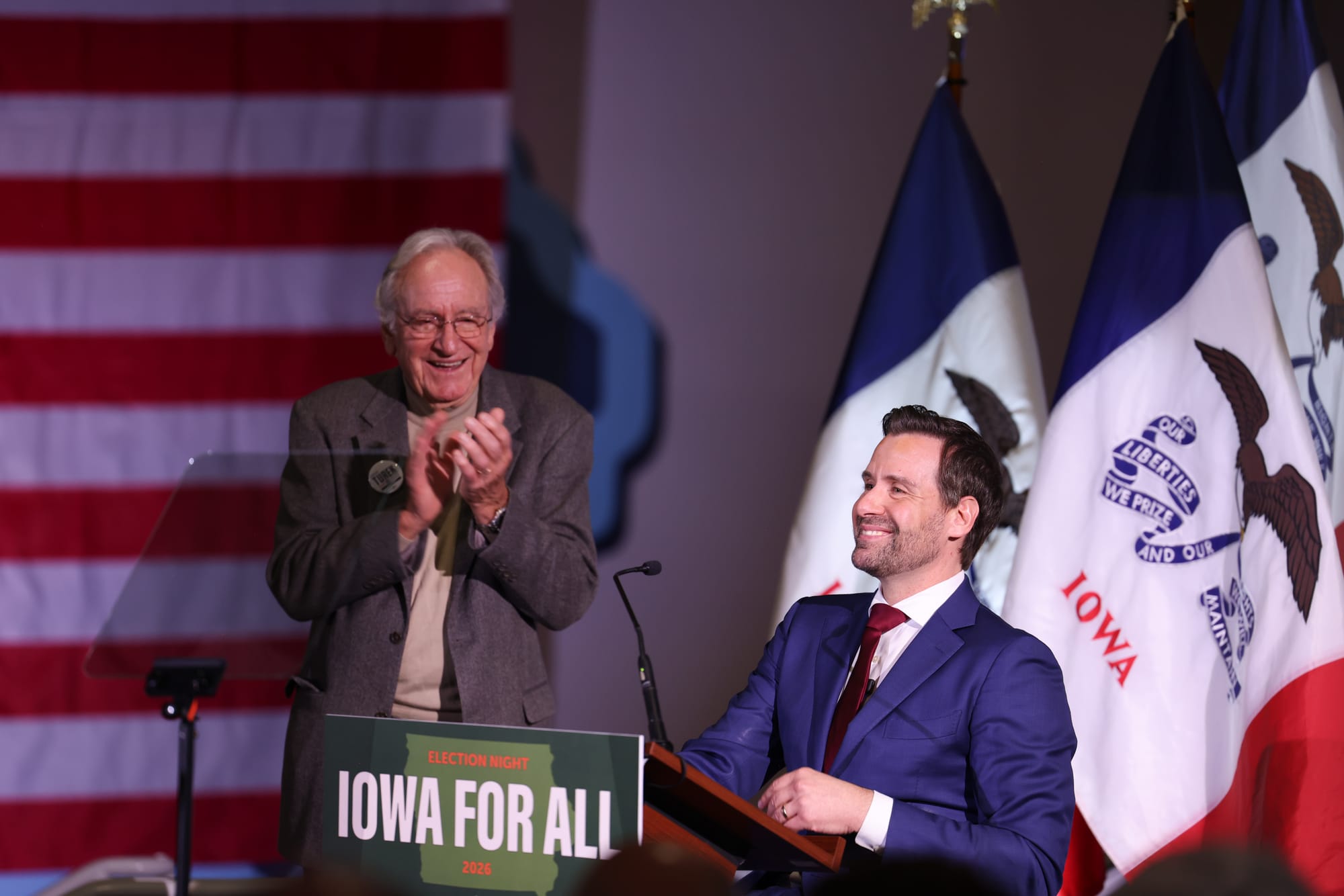
Among these new additions to the Senate was Josh Turek, a wheelchair user and gold medal-winning Paralympian. Turek said in his victory speech that his story is “truly the American dream”:
“Only in America could someone born into a working class family in Council Bluffs, Iowa – who went through the economic and healthcare struggle that I went through – ultimately be able to represent my country in 4 Paralympic Games, win 2 gold medals, represent my community in the Iowa legislature, and as of tonight, be elected to represent the state I was born and raised in in the United States Senate. Only in America is this possible.”
At the end of his speech he invited Tom Harkin onto the stage. Harkin served as Democratic Senator to Iowa from 1985 to 2015, and was the author of the Americans With Disabilities Act. In Turek's words:
“The great Tom Harkin changed my life and gave me and so many other disabled Americans an on-ramp onto society. Had it not been for this man, who represents the epitome of what is good, and what is good in public service, my life would have looked very, very different. [...] For 448 days, I have said it is gonna be beautifully poetic when the man who takes back Senator Harkin's seat is only there because of his work.”
But much as these results are very relieving, and Democratic control can put the brakes on some of the Republican assault on disability rights, the future of US politics does not promise to be beautifully poetic. Extensive damage has been done to the social norms and institutions that uphold rights for disabled people. And there's plenty of chaos to come.
The US Political Model of Disability
One organization trying to navigate their way through the chaos is Disability Culture Lab. Their work describes a U.S. Political Model of Disability, where they put disability in the context of the power used by governments, corporations, and billionaires:
“Decisions on who becomes disabled, and who does not, are often made for profit and power in corporate boardrooms, the halls of Congress, state legislatures, and city halls. They are also made by abusive spouses, racist police officers, and perpetrators of hate crimes. While disability itself is neutral, disabling others for profit, convenience, or hate — whether by policy or personal violence — is an act of harm.”
For Disability Culture Lab, people are disabled by “systemic oppression –from transphobia, anti-Black racism, and colonialism to capitalism, climate change, and imperialism”.
Such an intersectional view is, however, not the one shared by Turek. In a campaign advertisement, he used his disability story to push back on transgender rights:
“As a kid in a wheelchair, I faced my share of bullying. That’s why I believe that no Iowan should face discrimination. As a Paralympian, I also know it’s important to have rules. It’s why I oppose males competing in female sports, something that is already illegal in Iowa. I’m against taxpayers paying for sex changes too.”
In this, perhaps, Turek has something in common with Greg Abbott, the wheelchair-using governor of Texas, infamous in part for his politics against transgender rights. Abbott, who ran a “Let's Roll” campaign, was voted out in these elections, and replaced by Gina Hinojosa, who will be Texas' first Latina governor,
Another notable disability news from the midterms was that Virginia passed a constitutional amendment that overturns the prohibition on voting for those under guardianship.
“Exhausting struggle by an activist movement”
Going now to Spain, there is a new open-access book on the country's history of the disability social movement by Manuel García Ortiz:
““Every legislative milestone [...] every support resource, and every step toward inclusion has been the result of a sustained, persevering, and, on many occasions, exhausting struggle by an activist movement. It is a struggle led by specific individuals, by families who were simultaneously distressed and combative, and by organizations that—within contexts marked by political adversity, economic precariousness, and cultural isolation—succeeded in transforming individual needs into collective political causes.” (Translation from Spanish)
“In a forest with wolves and monsters”
Outside of the politics, there are some distressing stories about the violence disabled people face around the world:
In Gaza, a video documentary from The Real News Network shows two wheelchair-using women, previously athletes, and how they have survived the years of famine and displacement. Suha Maqat said:
“The closest people to me abandoned me—they didn’t stand by me. They left me to fend for myself. I feel like I live in a forest with wolves and monsters. I can’t. I try to make things work, but I can't.”
From Madagascar, a profile on people with albinism and their families living in terror because of the continuing violence against them.
And from Nigeria, stories of forced sterilisation and sexual assault faced by women with disabilities.
Making millions from disability fraud
In India, a disability board member and several others were arrested for allegedly running an interstate network to forge disability certificates. They were used to help students secure college admissions.
In Israel, prosecutors say that Bracha Rotman filed “dozens of fraudulent claims for child disability benefits” while simultaneously “collecting payments for families across Israel while charging them fees for her services.” She allegedly netted 9.3 million shekels, almost $3 million USD.
Funding cuts and policy shifts
Funding cuts and policy shifts: a report from Disability Reference Group on the impacts of cuts on international humanitarian spending:
“Because disability inclusion was rarely ring-fenced, it is among the first things to be absorbed or dropped when broader programmes are cut.”
UN resolution on access to assistive technology: a write-up from ATscale, including the story of the visually impaired Pakistani diplomat and assistive-technology user who made it happen.
Why estimates of disability differ. A policy brief from Center for Inclusive Policy on data harmonization.
Inclusive equality in every aspect of life: guidelines to apply the UN disability committee's guidance on intersectional discrimination against women and girls with disabilities, from the International Disability Alliance.
Disability, Education and International Development: an open-access book by Guy Le Fanu.
Star of one of the greatest TV shows passes away
In the United States, RJ Mitte, who starred as Walter White Jr on Breaking Bad, died aged 34.
See his life in pictures, how he changed the way we see cerebral palsy, and how he described “cerebral palsy and mental health [as going] hand in hand”. Or, as H. Alan Scott writes on Newsweek, how Mitte's character on Breaking Bad shifted the lens on disability:
“What made Walter Jr. so extraordinary wasn’t that the show ignored his cerebral palsy; it was that his CP wasn’t his entire personality. He wasn’t a sanctimonious PSA [public service announcement]. He wasn’t tragic inspirational wallpaper designed to make the able-bodied audience feel warm inside. He was moody. He was impulsive. He was obsessed with Raisin Bran Crunch. In other words: he was a regular teenager who happened to contend with a disability. He showed millions of viewers that CP was a reality to navigate, not a defining character flaw.”
Trick or accessible treat?
Chastity Chair. Malick Reinhard reports on sexual assistance in Francophone Switzerland. (In French.)
Happy fifth birthday to Kevin Gotkin's Crip News. It's a weekly disability newsletter sharing news on “artists and organizers making game-changing discoveries through the portals that disability opens.”
Trick or accessible treat? In Canada, Treat Accessibly was a campaign making Halloween more inclusive: “by moving yourself and treats to an accessible spot, putting out our free lawn sign, inviting neighbours, or helping your street lead the country.”
And, in case you missed them, last month's Debriefs:
- Our seat at the table is a bed, Anna Ruddock on why disability advocacy needs to understand energy-limiting conditions.
- “Let's block more streets” my bumpy times in Belgium, learning about institutionalisation and independent living in Europe.
- I am not from here, Meritt Buyer on working internationally on disability as someone without a disability.
And let me know your own adventures through disability news and politics,
Peter
Recent News
This update has 127 curated links from 45 countries and regions, organized across 38 subjects.
You can explore it organized by subject or by country.
Subjects
- Accessibility and Design
- Assistive Technology
- Civil Society and Community
- Communication and Language
- Conflict and Peace
- Culture, Entertainment and Media
- Data and Research
- Digital Accessibility and Technology
- Disaster Risk Reduction and Crisis Response
- Economics and Social Protection
- Education and Childhood
- Employment, Business and Work
- Gender Equality and Women with Disabilities
- Health
- History and Memorial
- Humanitarian, Migrants and Refugees
- Independent Living and Deinstitutionalization
- Indigenous People and Minority Communities
- International Cooperation
- Justice Systems and Legal Capacity
- Lived Experience and Opinion
- Mental Health
- Mobility, Travel, Transport and Tourism
- Policy and Rights
- Politics and Elections
- Relationships, Sex and Reproductive Rights
- Sport and Paralympics
- Violence and Harassment
Countries
Outro
Further reading. All the links from these curated editions go into the Debrief library, which now has over 8,000 links from over 170 countries.
Let your friends know. Sharing the newsletter is how people find it!
Connect. Get in touch. You can find me on Linkedin and Bluesky.
Help us do more. The Debrief is free thanks to reader support.
Acknowledgements
Photo by Scott Morgan/Bloomberg via Getty Images. Thanks to Celestine Fraser for help searching for images.
And many thanks to everyone who shares links, news and reports, and the readers and organisations whose support makes this work possible.