
Difference is the starting point
Dear Debriefers,
Well it's definitely hot here in the south of England! I hope you're all well and staying cool.
This edition takes us back to school with discussions of inclusive education (and the reasons it might not work).
From there we see workplace barriers, reforming police forces, and much more in another global tour.
An open call for writing: thanks to those already making submissions to Dear Disability Diary. Deadline is 20th July!
Explore the full guide of 91 hand-picked links: curated across 34 countries or 34 subjects. This edition continues from the update in May.
About this edition
The Debrief is published through a pay-what-you-can model. Thanks to Katherine, Stefan, Vita and Light for the World for renewed contributions.
Peter Torres Fremlin is editor of Disability Debrief and is from the UK.
Disability in the heat
Speaking of the heat, it made me remember Áine Kelly-Costello's reporting a few years ago on the wide-ranging impacts of extreme heat on disabled people.
And Áine's work to create the Debrief climate hub has just been recognised by the European Disability Forum as a best practice in disability-inclusive climate action:
“A wonderful example of a multimedia educational resource designed for persons with disabilities and their allies to use when planning their own inclusive climate action projects.”
Difference is the starting point
If education is in crisis, how can it be made inclusive? Earlier in the year academics and practitioners met at Wilton Park in the UK to discuss disability-inclusive education in a global context. A report on their discussions shares how they would frame the broader principles:
“Most Inclusive Education frameworks start with the preservation of the norm, the mainstream classroom, the standard curriculum, and the typical developmental pathway for example, and then consider how children who deviate from the norm can be brought into it. A pluralist approach inverts this logic. Rather than asking how children with disabilities can access a pre-existing system, it challenges whether the system itself can be designed to reflect the diversity of the way children learn and interact. Difference is not a problem to be accommodated; it is the starting point from which education should be designed. This shifts the ideological framing from charity to justice, and from integration to transformation.”
However from the starting point of teachers in a classroom, these ideas can appear unrealistic. In the Netherlands, a survey of teachers and educators found widespread scepticism about government plans for special schools to be merged with mainstream education by 2035.
Over half the teachers surveyed had a negative attitude towards inclusive education and nearly 70% believed more students should be able to attend special education. Teachers pointed to existing shortages and challenges that make it hard to imagine giving more intense support. One primary school teacher told NRC that:
“The further removed from the workplace, the more idealistic the view of inclusive education seems. It is an ideal vision conceived in an ivory tower.” (Translation from Dutch.)
However, even one of the teachers who expressed the idea that it wouldn't be realistic for “all children to go to the same school” came around to the same reframing as the theoreticians did in Wilton Park. Ninon Kreutzer told NRC:
“You shouldn’t think: we’ll send all children with all their support needs to a regular school and then see how it goes. You have to turn it around. The focus should be on: how do I design a school so that as many children as possible can develop there as well as possible?” (Translation from Dutch)
“Like a sickness instead of a right”
Taking a moment to visit the US news from an education view... The government offices that guarantee public education for disabled children are being moved out of the Department for Education, to the health and justice departments. In the summary of advocacy organisation DREDF, the move “treats disability like a sickness instead of a right”.
And recent news from the US also gives evidence to one of the most powerful arguments for inclusive mainstream provision: the abuse that takes place in segregated settings. Children with disabilities in New York were confined in wooden boxes by staff in the winter of 2025. And the founder of a private school in Arkansas was sent to jail for leading a “makeshift fight club”.
Happier news comes from international efforts on inclusive education in low- and middle-income countries. See this write-up by Chris Elliott of the Inclusive Futures programme for a view on the dimensions of work needed, from families to schools systems as a whole. Or see a video profile of Sightsavers' work in Uganda.
The main workplace barriers
Meanwhile a surprisingly sensible set of opinions on employment came out of the United Kingdom Parliament. Not sensible policy, of course, (that's not their style) but in a report on employment support for disabled people:
“We conclude that for too many disabled people the workplace is a hostile environment. If the government is serious about reducing disability-related economic inactivity, it must urgently address two of the main workplace barriers: the reluctance of employers to make reasonable adjustments, and the inaccessibility of workplaces, which leaves disabled people unnecessarily reliant on reasonable adjustments in the first place.
“We recommend that the government require employers to (a) respond to requests for reasonable adjustments within two weeks and, if a request is refused, to explain in writing the grounds for refusal, and (b) provide all new employees, whether they know them to be disabled or not, with information about the rights of disabled people at work, and of sources of support and advocacy.”
As a comparison, in Canada workplace accessibility is increasing for government employees with disabilities, but there the time needed to respond to workplace adjustments ranged, according to the government department, “from an average of 24 to 310 days.”
Making justice more accessible
In China, there are efforts to make judicial services more accessible, in partnership with disability organisations. One example of the supports given were for a deaf deliveryman surnamed Li who claimed compensation after a collision:
“Recognizing Li's lack of hearing, the court quickly activated its fast-track service for disabled individuals. Using writing tablets and voice-to-text software, the court assisted Li in preparing his case, in which he sought 2,900 yuan ($426) in compensation for medical costs, bike repairs and lost wages, and prioritized the filing process. The court also arranged for a professional sign language interpreter through the China Disabled Persons' Federation and invited federation staff to assist with mediation.”
In India, Vikas Gupta highlights the “structural inaccessibility” of the criminal justice system. And in New Zealand, the police recognise that disabled people are “on average 10% more likely to be a victim of a crime” and so have set up a roadmap for police action.
Migration policy and advocacy
Bucking a European anti-migration trend, there's positive news from Spain. As parts of government efforts to regularise migration, a provision is included to allow both minors and dependent adults with disabilities to obtain residency alongside their parents or legal guardians. This is a welcome contrast to many countries who have provisions blocking immigration of disabled people.
And from Ethiopia, see this profile on advocacy efforts for refugees with disabilities.
A solution for everything
Neurodivergent standards for buildings: Orla Huq shares standards and design recommendations on neurodiversity-inclusive accessibility.
A good solution for employment and independent living (and much more?) is suggested in the United States by the satire site Squeaky Wheel, who unveil the New RICH PARENTS™ Program.
Leaving the octopus...
In terms of how we're dealing with the heat here in the UK, I learned a new word today from Mummy Fremlin: to “aestivate” means to “pass the summer in a state of torpor or dormancy”. It's a tactic some animals use to deal with heat, like hibernation but for the summer.
And in case you missed recent Debriefs, do catch up on the last month, which include two editions beautifully illustrated by the authors themselves:
- How did disability shape your day? Discussion from the Debrief mailbag.
- What being institutionalised taught me about resistance. Rachel Litchman on the lessons she learned and why they're more relevant under Trump.
- My Octopus takes me to the Neem Tree, a magical illustrated essay of sleepless childhood nights, by Fulltime Hedgehog
All best wishes and let me know what you find in your aestivation or adventures in disability news,
Peter
Recent News
This update has 91 curated links from 34 countries and regions, organized across 34 subjects.
You can explore it organized by subject or by country.
Subjects
- Accessibility and Design
- COVID-19
- Civil Society and Community
- Climate Crisis and Environment
- Communication and Language
- Conflict and Peace
- Culture, Entertainment and Media
- Data and Research
- Digital Accessibility and Technology
- Disaster Risk Reduction and Crisis Response
- Economics and Social Protection
- Education and Childhood
- Employment, Business and Work
- Gender Equality and Women with Disabilities
- Health
- History and Memorial
- Humanitarian, Migrants and Refugees
- Independent Living and Deinstitutionalization
- International Cooperation
- Justice Systems and Legal Capacity
- Lived Experience and Opinion
- Mobility, Travel, Transport and Tourism
- Policy and Rights
- Politics and Elections
- Relationships, Sex and Reproductive Rights
- Sport and Paralympics
Countries
Outro
Further reading. All the links from these curated editions go into the Debrief library, which now has over 7,500 links from over 170 countries.
Let your friends know. Sharing the newsletter is how people find it!
Connect. Get in touch. You can find me on Linkedin and Bluesky.
Help us do more. The Debrief is free thanks to reader support.
Acknowledgements
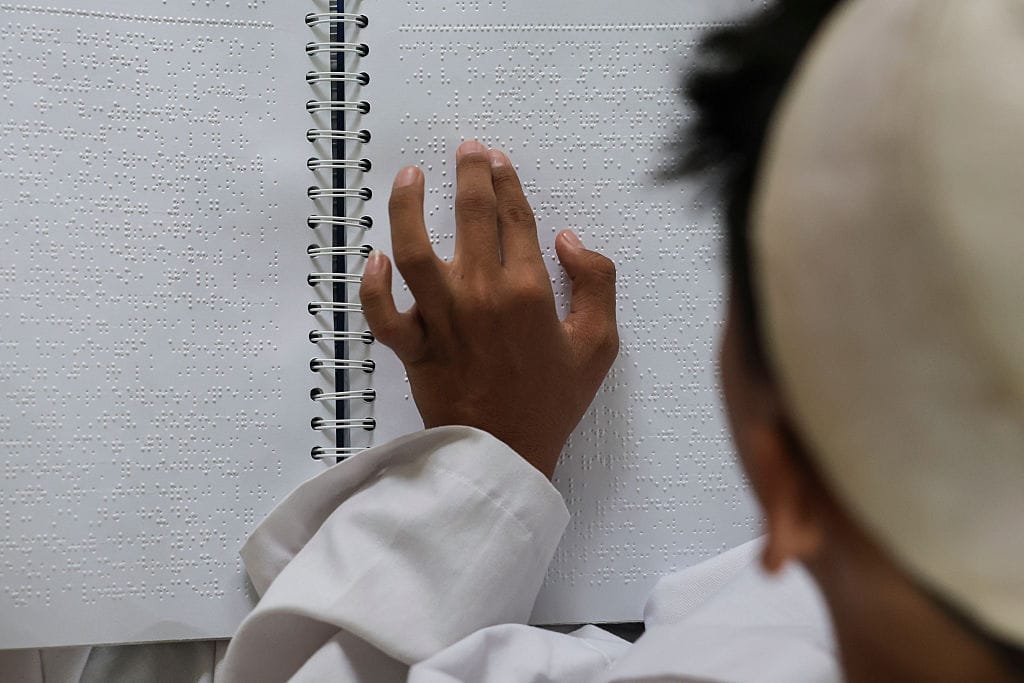
Photo by Agoes Rudianto/NurPhoto via Getty Images. Thanks to Celestine Fraser for help with its selection,.
And many thanks to everyone who shares links, news and reports, and the readers and organisations whose support makes this work possible.